AI Did Not Cause Your Growth Ceiling. Leadership Did.
Executive Summary
The growth ceiling on an AI investment is usually set before anyone opens the tool. A company buys licenses for the whole team, the bill becomes predictable, and six months later nobody can name a process that works differently. Most founders conclude they picked the wrong model. The stall starts somewhere else.
Brian Beck has spent 35 years in technology and works with leadership teams at small and mid-sized organizations on where AI and cybersecurity belong in a business. He was in the room when Microsoft first came to town to explain the cloud, and watched a group of owners leave more confused than they arrived.
He is direct about the first failure in AI implementation: if leadership cannot define what the business is moving toward, nothing downstream can point anywhere useful. From there he walks the sequence. Start with a leadership conversation about the next three to five years. Commit to one ecosystem instead of straddling two. Structure the data, because an environment nobody prepared produces confident guesses rather than careful answers. Then build the business systems that let a team use the tool by role rather than by headcount.
For founders of service businesses between $1M and $10M who have already spent money on AI and cannot point to what changed.
If what Brian shared resonated and you want to find out whether your business can actually absorb an AI or cybersecurity investment, head to proxurve.com. Brian works with leadership teams to align the technology environment with where the business is going, starting with the foundation rather than the tool. You can also connect with him directly on LinkedIn.
If this conversation made you realize you are not sure where your biggest growth constraint actually is, we are running original research on exactly that. Sixteen questions, about four minutes, and you find out how many of the eight stages of your revenue system run without you. Take it at thegrowthceiling.com/report.
Subscribe to The Growth Ceiling wherever you listen. And if this episode helped you see something differently, send it to one founder who needs to hear it.
Simone Henry: Every founder we talk to has the same AI conversation happening somewhere in their business right now. Someone went to a conference, came back with three tools, and now there's a Slack channel called AI Ideas that nobody follows up on. Six months later, nothing has changed about how the business runs. That gap between talking about AI and actually operating differently because of it. Is where a lot of good money and good intentions go to die.
Nate Grossman: With us today is Mr. Brian Beck. Brian has been in technology for over 30 in the technology business for over 35 years. And now he's working with small to mid-sized organizations to turn AI and cybersecurity from mere ideas into measurable business outcomes. He has spent his career inside that gap between we bought the tool and the tool actually changed how we worked. And he sees that gap as a leadership and execution problem long before it's a technology problem. All right, Brian, welcome.
Brian Beck: Thanks, Nate. Thanks, Simone. It's nice to be here today. Thank you very much.
Nate Grossman: Yeah. So you you've been doing this for over three decades. what's the pattern that you keep seeing in the businesses that you work with? the thing that shows up over and over, no matter the industry.
Brian Beck: Would say that it's probably gonna be the the gap between leadership having a technology strategy or just using technology as part of their business. Right. It's a little bit of a different headset. Technology should be a growth multiplier and the ability to be able to leverage my team more efficiently. But there's still that, Hey, we need new PCs, not the focus to how does technology help us drive the organization forward. So that's Probably the most consistent thing I see.
Nate Grossman: Nice. okay. So was there a specific moment in your career where you realized that the problem was not the technology necessarily? It was more leadership, how like the approach there?
Brian Beck: Yeah, it was many, many years ago. You already dated me with the multiple decades. So thanks for opening everything up with that one. But the
Nate Grossman: No problem.
Brian Beck: it was a it was way back in the day. Microsoft wound up
Nate Grossman: Yeah.
Brian Beck: coming to town back in Juliet, Illinois when I was living out there. And they came in and they were talking about this new technology called the cloud, right? And they were confusing ev absolutely everybody under the sun about what this was.
Nate Grossman: Yeah.
Brian Beck: Diagrams, pictograms, I mean holograms. I mean, you you name a kind of gram that was going to be up there, they were putting
Nate Grossman: Ha ha.
Brian Beck: it. And you could see the room was just really confused about what is this technology? Well what am I listening to? What's this thing gonna do for me? And there was never any translation into, hey, this can help you, right? Simply put, it's
Nate Grossman: Mm.
Brian Beck: a secure server over there, and this is how it can help you drive your business. It was more about Look how cool this new tech is. And I'm gonna throw all the acronyms at you to prove how smart we are. But you're losing the guys in the room who you need to be able to communicate with to convince them that this is an investment opportunity. This is a growth opportunity. It's a strategic investment you can use for you for your team, your organization, you know, future business plans. And that was when the light bulb went off for me that I need to continue to be able to focus what that translation looks like. So when communicating with business owners and You know, now you've got AI that's in the mix, which is a whole nother level above the cloud, but it's the same kind of transformational thing. It's the same lack of leadership understanding. How do we apply this tool for the benefit of our organization? And you know, we've got to be able to help them understand why this is a good investment, not buy my tool and watch it go crazy.
Nate Grossman: Yeah, it's the what is it, the old adage, you know, focus on the benefits, not the features. Or along those lines.
Brian Beck: Big time. Yeah.
Nate Grossman: you could easily run into a long bullet list of features that don't really make make much sense or matter to punch to anyone until they figure out what it's actually doing for right?
Brian Beck: Yeah. And right now, you know, you get so many people that get so excited about what my favorite LLM is. And I think part of
Nate Grossman: Yeah.
Brian Beck: it is their excitement that they know what the acronym stands for. But the other thing is the other thing
Nate Grossman: Yeah.
Brian Beck: is gonna be, you know, do you want this thing turned loose in your environment when you've got the newest, the latest, the greatest model, but you're not even fully aware what all the capabilities are gonna wind up being for your organization? What's the risk? What's the benefit? What's the reward? Is my cybersecurity, if that's even been a focus, is that going to stand up to what the new model is going to wind up bringing? And is it really worth jumping on it right this second? Or should we make sure that we are, you know, air gap tested and that we can use this thing safely and securely for the benefit of the team? And right now it's
Nate Grossman: Mm.
Brian Beck: still the the hype cycle as opposed to the practicality of it.
Nate Grossman: Yeah. Yeah. I just heard the other was it this week or recently it was all the big three, was it I guess it was Google, OpenAI, and Anthropic all came out with their new latest, greatest flagship models. And their the headline was, you know, flagship fatigue. Like people people no longer know what these things do. There's just too much. all at once. And th they released all of them simultaneously. It's just like how do you keep up with it? Right. So yeah. It's it's yeah.
Brian Beck: They're still Yeah, they're
Simone Henry: Copying from each other too.
Brian Beck: still trying to learn what the generation two generations ago are gonna do for my organization, but now I need the new one. Yeah, exactly. Right. Yeah. Yeah. These things are evolving at a rapid pace
Nate Grossman: Right. w which came out like three months ago, right? Yeah. Yeah.
Brian Beck: and they're still not sure how to be able to use Gen 1 for the benefit of the team. But in two or three more
Nate Grossman: Yeah.
Brian Beck: weeks, we're gonna find yet another model with this capability, with that capability. Slow down.
Nate Grossman: Yeah. Yeah, exactly. It's wild. Just it blows my mind to think about just a year ago where we were and how like trepidatious I was with like vibe coding and how much farther, much, much farther it is right now. Anyway, we c we could go off topic here real quick. But okay. So what the way you know I feel like this fits into the our you know pillars here is the viability pillar, the viability layer, which is like the internal systems and decisions that either support growth or break down under it without anyone noticing right away, unfortunately. and vi viability is the sort of like the second V in my V the V three growth system. So the first one would be visibility, right? Can the right people find you? and then the viability, can the business run on our run and operate on its own two legs. And then of course you want a a valuable business. But I think that what we're talking about here today hits that viability. it sounds like to me that AI and cybersecurity definitely land in the middle of that for a lot of founders that you work with. Am I am I am I do you think that's correct assessment or
Brian Beck: Well, yeah. I mean, right now there's a big
Nate Grossman: Okay.
Brian Beck: gap that goes between, hey, I need AI to be able to do something, right? Which is literally a response I will hear multiple times a week. I need it to do something. Help me figure out what to do. Well, hold on a minute. Right. If
Nate Grossman: Yeah.
Brian Beck: we're just looking for something to do with it, is it the right thing and is it the right time? And how are we going to lead your team through transformation or implementation and things along those lines? But then also is your technology stack going to stand up to it. So if if this is kind of a I want to do something, let's take a look at your cybersecurity first to make sure that we can even enable the AI to provide for you what it has the capabilities of being able to provide safely and at scale. And then also, is your hardware gonna be capable of running it? Right? If we're trying to use Laptops, let's just say, or desktops that have been upgraded from Windows ten to make compliant with the fact that Windows ten went into life last year. You're gonna try to run the latest, greatest models of AI on top of those PCs that are already how old. What's that experience gonna look like? We got we gotta tie the whole thing together.
Nate Grossman: Mm-hmm. Yeah. okay. So what would you say is like the biggest misconception that you run into when you know, founder, CFO even first kind of brings you in to start talking AI and cybersecurity?
Brian Beck: The agent is the be all end all. So which which LLM is your favorite? That's always the one that well, I don't want to say always, but a majority of the time that's the one that I wind up hearing that starts the conversation. Brian, I wanna use Claude.
Nate Grossman: Which one do you like? Yeah. Yeah. Yeah.
Brian Beck: Yeah. Okay, to do what? something.
Nate Grossman: Yeah.
Brian Beck: We need to define what we want to use. And by the way, you're in this particular environment, whether it's going to be Google or Microsoft 365. So why are we focused on this one particular tool to use? Is this a family favorite? Or is it something that the entire team is using? Or no, it's the one that I prefer to use. I like this one, so I want to make this, you know, scalable. And then you start walking down the path. And usually they find
Nate Grossman: Mm.
Brian Beck: pretty quick that, you know, when you try to open this up to the entire ecosystem and you depending on how big your organization is going to be, validation for the investment that you're making. And then it's the, yeah, that's right. How much is it going to cost me? Well, hold on a minute. We business case, right? Business case. So what are we looking to be able to try to improve? What's your target to be able to go for? Is this a realistic target? We got to talk these things through. Otherwise you're gonna wind up on, you know, as everybody still probably tell still talks about, you get the eighty percent that fail versus the twenty percent that are successful. We want you in
Nate Grossman: Yeah.
Brian Beck: the twenty percent. So let's focus to that.
Nate Grossman: Yep. And every it seems like every every month or so you hear this gigantic disaster with businesses implementing AI and how much what what was it? C a few months ago it was a company that burned through like a half a billion dollars worth of tokens because They had basically allowed everyone to run top-tier models at full full bore, you know. So it's like, yeah.
Brian Beck: When people are asking me about that, it's yeah, we get to flash back to the I say the good old days, right? Cause obviously you already aged me right at the outset. But you start talking about cell phone minutes.
Nate Grossman: Ha ha ha.
Brian Beck: Right. Nowadays it's pretty much unlimited plans and depending
Nate Grossman: Yeah. Yeah.
Brian Beck: on which carrier you're going with and what phones you want, right? That's what really varies the cost. But back in the day it was cell phone minutes.
Nate Grossman: Yeah. It used to be expensive though.
Brian Beck: Yeah.
Nate Grossman: Yeah. That was a big deal.
Brian Beck: Yeah, I got bit a couple of times, man, where it was, hey mom, I need some help. I didn't realize I just blew through my entire paycheck, my
Nate Grossman: Ha ha.
Brian Beck: cell phone bill, because of the minutes or the text messages and all that stuff that go through. This is the same thing.
Nate Grossman: Yeah. Yeah.
Brian Beck: You gotta you gotta think about what am I trying to do and why am I trying to do it and who should have access to what and start defining it.
Nate Grossman: Mm. Okay. let's see here. So you you've you ha you've said that a lot of people that you talk to that they talk about they ask you what AI can do, but but you tend to focus more on why companies struggle to implement it. does that struggle or sorry sorry, where does that struggle actually start, first of all. is it is it a budget problem, leadership, or something else?
Brian Beck: Say it's a leadership problem. If we can't define what we're trying to go towards, how are we supposed to be able to go towards anything meaningful? Right? Well, it's gotta start start
Nate Grossman: It's that top down, yeah. Like yeah.
Brian Beck: at the top, you gotta exemplify it, you gotta be able to walk it out, you gotta support the culture, prepare your team, lay the groundwork, set the example and carry it through.
Nate Grossman: Mm-hmm. Do you have any any examples? you know, you can you can anonymize it, you don't have to use business names or anything like that. But when when a business
Brian Beck: Yeah.
Nate Grossman: invested in AI or cybersecurity and it stalled.
Brian Beck: Yeah. I mean the multiple examples where they decided they were going to roll out this particular tool and they just gave it to everybody. So you start thinking about you're on a commitment for whatever this particular tool happens to be. And some of these organizations are on the larger side, a hundred users and up. you take a look at what that monthly cost is per user to be able to have access to any tool that they want. with no guidance, no framework, no what good looks like, no acceptable use policy, that gets real expensive real quick. And usually what the ownership, when they start looking at those bills, they're gonna be none too happy. How come we're not doing? How come we're not realizing the benefit of the investment that we're making? Well you didn't make an investment. You bought stuff and you gave it to the culture, well, you gave it to your organization. But you didn't give your team any guidance, no education, no training, no framework about what this looks like. Operations team, we want you to be enabled to do X, right? And then set up the security and the permissions to allow that team to be able to execute their roles and responsibilities. Instead, you give people carte blanche to be able to use this thing for something, and then that something starts to turn into distractions, or they get really, really creative. And they come up with different ways to be able to use stuff. But you start hearing
Nate Grossman: Mm-hmm.
Brian Beck: all those generalized terms, right? Things, stuff, no clear path that says you're going to execute this to be able to achieve this, that's going to help to improve X, that's going to provide the organization with what benefits.
Nate Grossman: Yeah. We're using AI to do this because, right? Yeah.
Brian Beck: Yeah. Yeah. Expectations. Those are important.
Nate Grossman: Yeah. Mm-hmm.
Simone Henry: Some team members may need more access than others just because of what they what they do, but just like rolling it out to everybody all at the same time and here you go. That's yeah. And you need direction. Otherwise it's just like, okay, you know, I'm gonna use this to get the best recipes for you know
Nate Grossman: Yeah.
Simone Henry: for banana pudding that there might be out there and like there's no bearing on
Nate Grossman: Yeah. Yeah.
Simone Henry: my job.
Brian Beck: Yeah, exactly. There you go. You know, and that's
Nate Grossman: Mm-hmm.
Brian Beck: that's part of the enablement framework, right? When you start putting in I was just doing a mm, wasn't a lecture, but I was doing a presentation to a very large group of business owners at a local university. And when I went up there and I just flat out said, Hey, so cybersecurity, how many of you guys get excited when you hear the term cybersecurity? Right? Five hands went up. It was a couple of hundred people in this room. And I said Probably because you hear the word security and so you think it's restrictive and everybody is here to be able to learn about AI, right? And you
Nate Grossman: Yeah.
Brian Beck: get up you get a bunch of heads going like this, like, okay. So let me ask you something. If you had unbound opportunity to be able to turn this out to your team of 100, 200, 300, there's some larger organizations in this room right now, how comfortable do you feel giving them access to your company data and just turning them loose on it? You guys get excited? maybe it is a cybersecurity guy and me, but I start getting cold sweats and I start getting nervous. But what if I could start
Nate Grossman: Mm.
Brian Beck: putting that framework so that I could roll this out to my entire organization, knowing the guardrails are in place and emboldening my team to go out there and based on their role, it's safe for you to be able to use and find ways to continue to enhance your day to day. What if you had that perspective? Now cybersecurity doesn't sound so scary, at least to me. Now that sounds like I'm enabling creativity. I'm enabling people to be able to improve how they work on a regular basis that could enhance what that team is continuing to be able to work on. And now that also makes it scalable. So now I can roll this out and start to recruit new students from maybe the university that we're at right now to come into the organization and be able to hit the ground running. I don't know about you guys, but to me that's exciting.
Nate Grossman: I think I was I took a lot of creative writing classes in college. And one of the things that they told us, believe it or not, was you know, counterintuitively maybe, but you had to know where the rules were in order to know how to break them. But rules and like limitations kind of actually helped to stimulate creativity in a was kinda like the point basically like you really need those boundaries because you just you just have to know where where the limits are and then you can kinda kinda think beyond that I guess maybe I don't but yeah i interesting interesting idea. All right.
Simone Henry: Right.
Nate Grossman: Do what?
Simone Henry: guardrails. You know, I
Nate Grossman: Yeah, exactly.
Simone Henry: I don't think I'd want to be able
Brian Beck: I like that term, Simone.
Nate Grossman: You y believe
Simone Henry: Yeah.
Nate Grossman: it or not, you actually have to have those. They're helpful in more ways than you think, yeah.
Simone Henry: Yeah. I wouldn't want to be like driving across a a long bridge over over
Nate Grossman: Yeah.
Simone Henry: an we you know, over a river or something and there are no guardrails. That would freak me out.
Brian Beck: Right.
Nate Grossman: Yeah.
Brian Beck: And that'd be a great analogy for this. I was talking to a gentleman last week and he used the intern if I could talk. Intern analogy. There we go. Now I got it out. And you know, when you get an intern that comes in, it was so applicable. When you get an intern that comes in, you want to give them that framework. This is what you can do. This is what your job, your role is going to be to be able to provide what kind of results. Well, why would a business owner want to be able to bring in AI, one of the world's most powerful, probably the world's most powerful intern, and then just turn it loose on everything? With no way to be able to validate or protect everything that you've spent however long, trying to be able to build up the wealth of the organization, the families that rely on you every single day, because the paychecks and all that stuff that comes in, clients, if you're a not for profit, donors, right? That they're associated to the community leadership, all of that stuff. Like we got to reframe the conversation. And then to your point, Nate, when you have and Simone, when you've got some guardrails and you know what those look like, now you can start to really turn your team loose to say, hey, those guardrails are in place. Go. Because you realize
Nate Grossman: Yeah.
Brian Beck: that you're not going to be putting people at risk that rely on you every day.
Nate Grossman: Yeah. I I would think that would be a tremendous relief on the part of leadership as well, because, you know, they've laid it out, they know where they're not supposed to go. and presumably they have the the the safety features in place to prevent people from you know, making bad decisions, I guess. But
Brian Beck: I hope so.
Nate Grossman: that that would free up their s strategic thinking, right? Their capacity in that case. So that's good.
Simone Henry: So when you when there is that that stall or or you know when it breaks down in the business, what does that look like day to day for the team? Are people just not not using it? Is there like friction? What's what's happening?
Brian Beck: No, I mean you wind up getting all of it. I got asked to come into one an organization that was getting ready to do a full staff rollout, which I was like, no, hold on. But I mean it it's their organization, their choice. Brian, can you come in and start to coach our people towards what this tool is going to be capable of and how we're setting it up and what we're doing? I said, Okay, do we have X, Y, and Z in place? They said it'll be in place by the time you walk in. I said, okay, fine. I walk in. None of that stuff was in place. Right. So I start asking the team because now all of a sudden, I got a pivot. So that music background that we all talked about before, that thing starts coming into play.
Nate Grossman: Yeah.
Brian Beck: And I start reading the room and I'm like, okay, who do we got in here? We got this, we got that, we got this. Okay. So how many of you guys actually like AI and you're looking forward to it? Right. You wound up getting like a quarter of the room that was excited. And so what tools are you guys using? And they're rattling off basically the big three, right? In different orders of stuff. And then you start asking people, okay, so who is afraid of AI coming in and you feel like it's gonna take your job? And you get about another third of the organization that was in that particular presentation, that was close to a hundred that was in there, somewhere between 75 ish and a hundred. And third hands go up. I'm like now. That's an interesting response. So why? Not unexpected, but interesting. Because we've got a quarter of you guys over here that are really excited about doing it. But do you see the disparity within this room? And then you got the balance of the people that are on the rail, trying to even figure out do I want it? Do I not want it? I kind of play with it a little bit. I've tried it at home, but when we don't have structure. You get this, and people go in every which
Nate Grossman: Yeah.
Brian Beck: way direction, right? And when you allow people to be able to run away
Nate Grossman: Hm. Well.
Brian Beck: with their own imagination without setting expectations, and you've got no educational foundation to be able to build on top of, you're not going to be able to get
Nate Grossman: Yeah.
Brian Beck: people rowing in the same direction. So we're not going forward. We're going every direction except that. And so it's a bad experience.
Nate Grossman: Mm-hmm.
Brian Beck: And now they've got all kinds of justification for all this is terrible. I don't want to use it. this didn't work for my organization. No, you didn't have leadership structure that drove what a successful strategy looks like. Communication, not exemplifying what good is going to look like, not setting educational elements in place to say, hey, for sales, we want you guys doing this, and this is gonna be what our goal is. And here's who's leading that initiative for your team, or over here to be able to do this for the operation side of things. It's just chaos. And that's really expensive chaos, real fast.
Nate Grossman: Yeah. I I I mentioned earlier about the half billion dollars in tokens that got burned through. There was another story that came out recently. it was a researcher. I think he was he was he was a solo researcher, but he was using AI apparently without guardrail proper guardrails, and it deleted his entire seven hundred gigabyte data file that he had.
Brian Beck: I will
Nate Grossman: That he dumassed. Yeah. anyways, speaking of expensive mistakes, right? Like in more than one more ways than one. yeah,
Brian Beck: Yeah. man.
Simone Henry: Yeah. goodness.
Nate Grossman: wild. All right, so let's get into the your framework here. When when a leadership team brings you in, how are you actually evaluating where AI or cyber cybersecurity fits in their business? What's the process?
Brian Beck: The first thing is, yeah, the first thing is a culture conversation. So we call it an executive leadership conversation or right, we're in technology. So it's got to have a three letter acronym and ELC. So when we go through that, part of that is to be able to understand what their strategy is with technology overall, but it's also business growth trajectory. So where do they see themselves? What targets are they trying to be able to shoot for over the next three to five years kind of thing? and you know, depending on how that conversation goes and the people we're talking to, the the conversation is dynamic. So sometimes we get to all those goals, sometimes we get to more, and we get even more context around what they're doing. And other times they stay pretty strict with here's the two things or three things I want to cover, and boom, off we go. Part of that is gonna be culture alignment and culture fit. How well are we gonna work with them, right? So that we can continue to carry this forward and it's a meaningful relationship on both sides. From there, then you've got to evaluate the technology environment to see if what they want to do culturally is going to match up with their tech ecosystem so that technology can support those plans and can support that culture. It's not just, I've got old laptops. Come on. That's IT stuff. We need to be able to understand how this translates into business results. And then be able to take that and translate that into these are the goals you want to be able to achieve in a way that leadership understands and that it resonates. So that's where that translation component winds up coming into play. It's not just faster laptops means faster work. No, that not at all. Depending on the role and the responsibility and where we need to be able to go. You know, cloud resources, are you doing stuff on-prem? Do you have a server? Do you need a server? Cloud-based server. All those different things come into play. But especially when you're talking about AI use, data structure. Is your data structured consistently? I would say 9.9% out of 10. the answer is no. So it's kind of all over the board. It's Nate structures his data this way, Simone structures her data this way, Brian structures his data this way. And we expect AI to go into an environment like that and just magically understand how we structure our data for the benefit of an organization. And how exactly,
Nate Grossman: And and how it all fits together, right?
Brian Beck: and how it all fits together. But then you also have to train the data or train the AI model to understand. So, where is this data located? And by the way, who should have access to this data and what is their role? What's their primary responsibility? I mean, you got to think about this. It is like a very powerful intern. So if you don't put those structures behind it, and if you can't train it, then it's going to guess. And that's where you start hearing about hallucinations and you see the little disclaimers at the bottom where this was generated with AI. It may have mistakes that are in it. For the most part, it's because you didn't take the time to structure your data, to understand the ecosystem, to help AI understand the ecosystem that you just turned it loose into. How do I understand what this is, what that is? So all of those components, we got to take a look at all of that stuff. And then we got to blend it all together with a number of people who are way smarter than I am in a whole bunch of other areas to be able to help all of us understand where do we need to go and what's the plan to be able to rebuild this technology ecosystem into where they wanna be able to drive it towards. Right. So do we need to restructure the data? How do we prioritize this? Do we have certain teams we need to focus to more than others? Access control permissions. Do they want to get cloud? They got a mix on-prem. They got they're over here, they're in Google, they're in Microsoft 365. We got to start to standardize. Standards, critically important. Once we can come up with that roadmap and the priorities that align with where the organizational leadership wanna go, now we sit down with them and we say, hey. Based on the goals that you had outlined, let's revisit those, make sure nothing has changed. Now let's start building towards. Here's why we believe these are the priorities. Again, from our side of the fence, we're the tech guys and the business strategists, right? So this is what we understood from you. This is what we see with technology. This is how this all translates to be able to assist in getting you to the result that you were discussing before. Does this make sense? And we want to make sure that everybody is on the exact same page and we're all talking the same language. We we don't talk over people, we don't talk around people, we don't talk at people, we talk with people. And people need to be able to talk with us as well. Concerns, comments, clarifying questions. It's a safe space all the way around. And from there, once we can align those priorities and everybody is on the same page, yeah, we should approach things in a certain way. You know, because they may see certain things and consider certain things that we're not aware of at the at the time. Right? We're the new kids on the block. My wife wants me to take her to see that concert, by the way, which I'm not opposed
Nate Grossman: Ha ha ha.
Brian Beck: to. I know I digress. But
Nate Grossman: Yeah.
Brian Beck: that once we understand what those priorities are that align with that business for the benefit of that business that we're talking to, now we can go back and put the numbers together and then we come back and say here. Okay, so here's based on the priorities that we all agreed is a way that this needs to be able to flow and adjust to be able to help you reach your goals. This is what that looks like. And then they tell us either yay or nay, or we're gonna do a part of this over the next six months or nine months, whatever that happens to be. And let's project out the regular the rest of whatever they happen to be that was on the roadmap, you know, depending on budgetary constraints or concerns. Maybe the business is being put up for sale. And to your point with the the V3, right? Your growth system. A lot of times organizations
Nate Grossman: Yeah, yeah.
Brian Beck: are starting to invest in this to be able to inflate the valuation of their organization so that they can prepare it for acquisition and command a higher higher price tag, right? Essentially, or maybe a higher investment amount
Nate Grossman: Yeah. Somebody
Brian Beck: on the back end.
Nate Grossman: I was talking to somebody recently and they were saying that even the SBA is now wanting to know what your AI plan is for your business in order to qualify for loans. To what degree that that is true, I'm not 100% sure, but it sounds like that's kind of part of the mix now, which is interesting.
Brian Beck: Well, state of Indiana has the governor pushed down an initiative, which I think is pretty ambitious. And I think it's a great thing to do, depending on on how it how it's implemented all the way across the board. They're just starting to get it rolling. so they're learning some things that are good and some things that are, ooh, we tried that. No, but we need to pivot. The great thing is that they're measuring that pretty closely. So if something didn't work, right, they're they're pivoting slightly to be able to make the adjustments based on feedback. Which I think is tremendous. They're not waiting
Nate Grossman: Mm-hmm.
Brian Beck: until the end and then looking back at a whole year and going, Ha, we should have done that like six months ago, right? So I think they're doing it pretty ambitiously and I think they're doing a pretty good job. But they want to make Indiana's the economy in the state of Indiana, the number one AI readiness state in the US. And so to be able to do that,
Nate Grossman: Is that
Brian Beck: education, man, gotta start foundation.
Nate Grossman: Okay. Okay. So it's not just necessarily, you know, encouraging development of data centers, for example. It's more broad picture checking all the boxes kind of thing. Yeah.
Simone Henry: getting getting businesses to to integrate it and start using it so that they can, you know, be more efficient, expand, grow,
Brian Beck: Yeah, that's that's the key. That's the key.
Nate Grossman: Interesting. Yeah. Yeah.
Simone Henry: maybe even drive more jobs, different jobs to the state.
Brian Beck: Exactly.
Nate Grossman: And I guess the idea there is if you're demonstrating the value, you're it's creating demand, which provides reason for building data centers to begin with, but yeah.
Brian Beck: I mean that could be a definitely a secondary that hasn't been that I've seen and I've not I've not heard him say it. I've participated in one of the presentations, which was I had a blast. Had a bunch of really smart people in that room, enjoyed the conversations. But the data center part has not been a component of any of the conversations at those events that I've been at. But it is definitely a part of the conversation
Nate Grossman: Interesting.
Brian Beck: outside of those things. What I see is a little
Nate Grossman: Yeah, yeah.
Brian Beck: bit of a Is getting people so excited about the opportunity and the potential without discussing the need for the structure and the foundational element. That there's a there's
Nate Grossman: Yeah.
Brian Beck: a disconnect between those two. But I know they're they're talking about how do we how do we shore that up? They recognize it.
Nate Grossman: That seems like a messaging problem on the part of data centers.
Brian Beck: Yeah, well it doesn't get as much, right? It's not a it's not as fun, right? You can get up there and show AI and all the cool things that it can do and automate this and automate that and draw this and draw that and graphs and tables and all kinds of things. That's cool. Foundational cybersecurity, that's like ew. Right. That's not fun.
Nate Grossman: Yeah. Yeah. Yep. Mm-hmm. Interesting. So let yeah. Yeah, a hundred percent. I I know people
Simone Henry: Definitely necessary.
Nate Grossman: who are working on data centers. This is why it's top of mind for me, but it's kinda interesting. it's a big one going in in Lebanon, Indiana right now. So that's
Brian Beck: okay. Not that far from me.
Nate Grossman: Yeah. All right, so practically speaking, what does this look like in practice for let's say a business that's doing two to three million in revenue? They got a team of around twelve, let's say, where would you start with a team that size?
Brian Beck: well the first thing is obviously gonna be the foundational element. So focus to the cybersecurity side of things and then make sure most small businesses, especially in the state of Indiana, where you and I both are, Nate and Simone, we didn't get to cover where you're at. So where are you coming to us from?
Simone Henry: I'm on the east coast in DC.
Brian Beck: Okay, yeah, you guys are a different animal out there. But here in
Nate Grossman: Ha ha ha.
Brian Beck: in Indiana, a
Simone Henry: Yeah, we're a lot more crowded, that's for sure.
Nate Grossman: ha.
Brian Beck: well they've got most small businesses are still straddling between are we in Microsoft three sixty five ecosystem, are we in the Google ecosystem, or are we straddling a little bit of both, right? And
Nate Grossman: Gotcha.
Brian Beck: you've got to commit. So commit to one.
Nate Grossman: Yeah. Too much
Brian Beck: And depending on who you want to be able to grow up to be, yeah, there's too many variables that come with that. And the security practices
Nate Grossman: Yeah. Yeah.
Brian Beck: in each one of those environments are different. There's a lot of similarities, but how you administer those
Nate Grossman: Yeah.
Brian Beck: is going to be different. So trying to create one ecosystem with all of those variables, overly complex, too complicated, too costly, and by the way, artificially inflates the need for support, which artificially inflates your cost, artificially inflates your risk. Let's streamline, let's get these costs under control and get a cohesive strategy in play. Once we can do that, now we start saying, okay, all right, now we've got a few tools that we can take a look at. And these would be the first two that we would start off with, right? If we're in 365, we're a strong believer in copilot. And I know that may be a no-no word to certain people in the AI space, but copilot is crazy powerful. The security permissions associated to it if you're in a 365 environment. I mean you can't match it. And then the tools underneath it for leadership to be able to validate how my team is using what to be able to validate success or where I'm challenged is right there at your fingertips. You you have to be taught how to be able to read the information, which is really not that difficult. Microsoft does a lot of good knowledge articles on it. We help to support it, that kind of thing. So that's where we start, unless you have a a good reason. And some organizations,
Nate Grossman: Hm.
Brian Beck: they're doing coding, they've got a few other things. They do have good reasons to be able to use other models or in addition to, right? If you're in Google environment, why wouldn't you look at Gemini? Crazy powerful tool, already native to that environment, right? So let's talk
Nate Grossman: Mm-hmm.
Brian Beck: about that and why we want to be able to use that. And maybe there's a good reason not to use that, but First considerations, right? Security, scalability, training, ease of things for organizations and leadership to be able to understand, plus is minus, all that stuff. Let's talk about that first. And then if we need to eliminate those as primary options, okay, let's do it. But let's have the conversation. Then we can start focusing towards culture and people. Because now it's going to be educational. It's going to be how do we prepare our people for it. Messaging, what does messaging look like? Leadership, how are you going to walk this out to be able to start to prepare your people for, but then also enforce, take away the fear and replace that with enablement. And that that's a skill set. Some leaders are much better at it than other ones are. So how how can we help to support that kind of aspect of of a roadmap?
Nate Grossman: Hmm, interesting. I yeah, so you have to start
Simone Henry: That is interesting.
Nate Grossman: with the the fractured environment first in a small business. Yeah.
Simone Henry: And I was thinking that part about like the the messaging and getting how you get your people on board, that touches our our visibility framework as well. That's like within the within the company that has to have
Nate Grossman: That's that internal, yeah.
Simone Henry: that's internal visibility. It has to have yeah. It's
Nate Grossman: yeah. As important if not more. Yeah, definitely.
Simone Henry: very important because yeah, if if people don't adopt it, well then you'll have this disjointed disjointed rollout and disjointed well disjointed i implementation.
Brian Beck: I think one of the things that often gets overlooked though is most of these, most of the new students nowadays, right? Like my son is a freshman, just started and couldn't be more proud of him. Honor role, honor student, honor program. I mean, honor he he is he is me times eighty. I he's he's unbelievable with the potential that he has. And if you can't tell proud papa right here. But one of the first things
Nate Grossman: Mm-hmm.
Brian Beck: that he showed me, like two days before we drove him out for his move in day. was hey dad check this out and he showed me on his phone the 12 step rollout that he's got for an orientation around AI use at his university wow
Nate Grossman: wow.
Brian Beck: check that out right but then when you're doing some of these presentations that I have an opportunity to do and work at some of the local universities you hear about and you see what these students I say students I mean some of these you know 21, 22 23 Years old, depending on the program they're going into, and you know, postgraduate, all that kind of fun stuff that they're working on, there is not one of them that I have spoken to that is not using AI in some capacity. So, how organizations and how business leadership adopts AI into their organization, and to your point, Simone, if it looks disjointed, feels disjointed, when they come in for a job interview. What is your opportunity to be able to recruit the best of the best coming out of that class to support your organization? Probably not very good.
Nate Grossman: Mm-hmm.
Brian Beck: So we got to think about this. It's not just what I'm doing in within my walls. It's what am I doing within my walls to help prepare me for success and recruitment. Because I don't think you're always always going to be recruiting people with 40, 35, somewhere, lots of decades worth of experience, right? Depending on the role. You're going to be trying to recruit on the younger end of things and the younger end of things. This stuff is just at their fingertips all day, every day, in school, higher education, all of that stuff. So you've got to be able to have this and make it a part of the culture of your organization. Now you got high recruitment opportunity and retention.
Nate Grossman: Uh-huh. So you you've you've mentioned that every firm's infrastructure adoption curve and culture is unique, right? But so how are you figuring out what a specific business can actually absorb versus like, you know, what looks good on paper?
Brian Beck: That's that a lot of that comes through conversation and interaction with leadership. What kind of commitment they wanna be able to make? If they're gonna try to abdicate it out to lower level management, like talk to Bob, and you and Bob can figure out what this is gonna look like in there, not gonna be a good mix. Gotta have leadership top down. They've got to be involved, they gotta be part of the messaging, they gotta start to exemplify what good looks like. And the more that you do that, the more success you're gonna have early on. The people who are trying to push back on this are gonna see that the big boss and they're gonna feel a little bit of pressure. And depending on how you message it, it'll be either positive and motivational pressure, or it could be negative pressure, and they may wind up leaving. There's right? Yeah. So
Nate Grossman: Yeah. Yeah.
Brian Beck: all of that is gonna be culture management. So having those conversations
Nate Grossman: Mm.
Brian Beck: up front is really the very first step to understanding. Is this going to be successful or is this going to be transactional? If we see an opportunity for success, then let's take a look at the tech stack. And if the tech stack and the culture and the vision match up, it's usually going to be a really good relationship. And more than likely, they're going to be patient enough to continue to invest in their team with education because they understand the long term opportunity that this brings into their organization. And when you get that vision culture alignment, it's I mean, you've got some really incredible people that are out there that are trying to do this, they want to do this the right way. They just need a little bit of the guardrails that we talked about earlier. How,
Nate Grossman: Yeah.
Brian Beck: how do we do this? How do I I don't need this yesterday, but I know I need to do this and I need to be intentional in doing it. Those are the right words and the right outlook to be able to say, hey, yeah. We and any other organization that really takes this stuff seriously and really is focused towards business result, not just I'm gonna just milk this guy. Right? He's gonna need me for forever. This is gonna be great. That's
Nate Grossman: Ha ha
Brian Beck: that's not good, man. That's not healthy for either side. You wanna be able to provide them with the
Nate Grossman: Yeah.
Brian Beck: tools and the coaching and make sure that they have the opportunity to take that forward and continue to drive success on their own.
Simone Henry: Like that you're putting the the AI and the the cyber security together is you know, because I think a lot of people don't think about that when it comes to to implementing AI. is I think they most of the time they just think about okay, cost savings, you know, efficiency, everything's faster,
Nate Grossman: Yeah.
Simone Henry: everything's easier, you know. but and they don't think about maybe data leak. and you know stuff like that.
Brian Beck: In my language, Simone.
Nate Grossman: Do they ever? Yeah.
Simone Henry: Yeah. how does where does like automation and or systems work to show up in your in your process?
Brian Beck: A lot of that is gonna be what the owner sees as a value, right? Or leadership sees as a value. Cause they they do hear the term efficiency. So I hear the word efficiency bounced off of me quite a bit. And then you start asking them to define that. Like, how do you want to find that? Well, I want more done faster. Well, you gotta think about mental capacity of your team, right? What's the impact on that? Are you gonna adjust before they could do, I don't know. Two pro we'll just say projects. Two projects a day. And now you want them to do 10. I mean, is that realistic or are you just trying to burn them out because you feel like, hey, I can automate
Nate Grossman: Yeah.
Brian Beck: a whole lot of this stuff. What's the right balance between the two? And a lot of times it's not about I want to try to recoup cost initially, right? They they realize that they're making an investment up front. So if they're making an investment, it's long term projections. Maybe I don't need to hire five people like I did last year to achieve the same level of culture support, client interaction, right? The client experience, quality of the products that we're delivering, whether it's going to be service base or an actual physical product base. Instead of five people like we had to do last year, I can maintain my culture and maybe add two. That's my long-term ROI because yes. I've become more efficient at the processes that led up to what I needed to hire a bunch of people for before. And now the job roles have changed, the job description has changed, right? And now that is shifted over some of this is defined by AI, has taken over this portion of it. But now I need people to adjust their job responsibilities to complement this part of it. And now I need less people going forward. To be able to provide that same result. Okay, awesome. That that's a great way to be able to look at it. You're maintaining your organizational culture, which is unique. You're growing, you're hiring additional people, but you're hiring the right people with the right skills that's gonna allow you to be able to continue to recruit and drive an opportunity for success going forward.
Nate Grossman: I I love that you are focused so much on culture, you know, like it's you're you're instead of like, you know, we're gonna get rid of all the humans it's more like it's
Simone Henry: Ha ha ha.
Nate Grossman: more like, no, no, no, we can't do this without humans and it ha this has to be done the right way so that everyone's on board and it doesn't destroy the the positive, you know, goodwill. that the people working for the company have for the company. So I think like that's that at least that's how my I'm interpreting it. Does that sound right or
Simone Henry: And you know what? It it the thought just came to me that all of these these companies that did try to get rid of all their humans, you know, let let a everybody go and say, okay, well, you know, we'll just use AI to take care of it. That company, their leadership has shown what they think of their team. They're not a team.
Nate Grossman: Yeah. Yeah.
Simone Henry: They're just employees, really. They they've basically t told the entire world what they think and how they see their their employees. They're completely expendable. They're just a a
Nate Grossman: This is yeah.
Simone Henry: line item on the balance sheet.
Nate Grossman: Yeah.
Simone Henry: You know, we can just we can get rid of them at will. wait a minute, we made a mistake. The AI doesn't work right. Okay, come back, you know.
Nate Grossman: Yes. That is exactly what happened from what I understand to Ford Motor Company with the the the quality control on the line. They thought that they could give that to AI and get rid of the engineers. But
Simone Henry: Yeah.
Nate Grossman: they found out very quickly that that was not the case. So they had to hire they had to beg the engineers to come back and pay them more to return. So yeah. Hard lesson. yeah.
Brian Beck: Yep. And that's only one example. There are multiple examples of that. Multiple examples. Yeah, you can't put a price tag on your company culture.
Simone Henry: Pew, yeah. It's really quite
Nate Grossman: Yeah. Yeah.
Simone Henry: like no, you can't. And and the people that actually make it that make your your business work, that make your company work, right? They're they they sacrifice their so much of their time to to make make the shareholders and the owners and the C and the C suite people, you know, rich, honestly. And it it's very sad actually to to think that yeah, they they really shown their true colors, honestly.
Brian Beck: The impact on the morale?
Simone Henry: instead of saying, Okay, we're gonna adopt AI and we're gonna
Nate Grossman: Yeah, yeah.
Simone Henry: have the AI work with you to make you more efficient or take some things off your plate so that you can you can advance and and do more of the things that only humans can do, you know?
Brian Beck: Mm-hmm.
Simone Henry: take away some of the the inefficiency and the repetitiveness. yeah. But we'll still keep the humans 'cause we still need humans.
Brian Beck: There are nuances in every organization
Simone Henry: Good now.
Brian Beck: that people wind up learning that you overlook, you take for granted, it just becomes second nature to you.
Nate Grossman: Yeah.
Brian Beck: And you're not going to be able to just pop that into tech and just assume that all of a sudden those nuances are known and everything is going to continue moving forward. You're going to hit roadblocks, you're and you're going to just look at yourself like, I didn't know we did that. Wait, what do you mean? Right? And exactly.
Nate Grossman: Right. Who who does it who did this thing? Yeah.
Brian Beck: Right. And all of a sudden you got impact failure. And to Simone's
Nate Grossman: Wha why were we doing that? Yeah.
Brian Beck: point, now you you know, leadership has shown that we are not a team. We are not killed so many organizations you walk into the we're a family. right. You're out.
Simone Henry: Yeah.
Nate Grossman: Yeah. Yeah.
Brian Beck: Yeah. So then leadership impact, culture impact. Right, right. And then recruitment impact and
Simone Henry: Thank you, so much for being family, right? I I don't know.
Brian Beck: yeah. Yeah, yeah. It's a thing.
Simone Henry: I I think if a a company did that to me, I and you know, then they found out that while AI isn't there yet, it can't do my job as efficiently as I can, or as you know, as well as I can, and beg me back. I mean, I don't know. I think I would ask for like three times my salary. Work for work there for
Nate Grossman: yeah. No doubt.
Simone Henry: a year or six months because now I know for sure what they think about me, you know? And
Brian Beck: Yeah. Yep.
Nate Grossman: Well well, not only that, but it's clear the value you provide.
Simone Henry: Yeah. Like it like, you know what, y'all can do it yourself. I'm rolling out. You know, I don't I wouldn't want work for anybody like that. Yeah. Completely broken. It's terrible.
Nate Grossman: Ha ha ha.
Brian Beck: Right. Right. But that that trust is broken. Yeah, trust is broken. You cannot I mean it
Nate Grossman: Yeah.
Brian Beck: I hear it so many different times. You know, you see the culture on organizations' walls and or on a business card or something along those lines. And then you hear about an event like that and you realize that it's words on a wall. And the employees are gonna reciprocate that, right?
Simone Henry: It's just words, it's just marketing, really.
Brian Beck: The re employees are gonna reciprocate
Simone Henry: Yeah.
Brian Beck: that. I used to bust my butt and I stayed until six to make sure this was done because I knew Doug needed this and it was gonna benefit the organization. It was the right thing to do in my mind, cause the company is taking care of me. I need to invest additional
Nate Grossman: Yeah. Yeah.
Brian Beck: in it that's maybe off the books, but I know it's it's a good thing to do. I'm a good person, right? Morally, it was the right thing to do. Then they turn around and do that. Five o'clock comes, you're out. Right.
Simone Henry: Sister's just like, yeah, forget it, I'm out. You know? I'm the last one in and the first one out after that.
Brian Beck: Yeah, why are you gonna continue to invest just knowing that right? And probably a lot of other people too, because they saw that. You you experienced it, but other people saw it. So now culturally, what's the impact of that? And how do you come back from that? How long is that gonna take?
Simone Henry: Yeah, that that culture that they, you know, worked so hard to to build up is completely destroyed af after that.
Brian Beck: Mm-hmm. Yeah. And for what? I mean, come on.
Nate Grossman: Takes many years to build trust and only a few seconds to burn it down. So yeah.
Brian Beck: Yep, absolutely.
Nate Grossman: all right. So Brian, where does your work end and the next layer begin? So let's, you know, what needs to be true in the business already, in the rest of the business, that is, for AI or cybersecurity investment to actually stick.
Brian Beck: Well, first it's gotta you gotta identify the gaps, build the plan to be able to put the standards in place to allow that foundation to come into play. Usually I just tell people, think of me like the concrete guy. I'm gonna come in, I'm gonna evaluate the foundation. If there's cracks, then let's address those cracks. If your foundation is broken and we need to rebuild it, it's better to do it now than after the fact. After the fact is really risky and you don't know what those implications could be. So let's address this now. Shore up the foundation. Once we can shore up that foundation, now we can start to scale and build on top of it. And that's where once we can come up with that plan and start to scale on top of it, I step back and the really smart guys wind up coming in to take over and do all the architecture builds and data analysis and make sure that the right roles, permissions, and everything is put into play. And once those guys are put into play and those standards are implemented. Then I come back into the picture and start coaching along with leadership to make sure that everything is working as intended. So once we have those standards in play, our goal is to be able to coach leadership, to be able to take the AI solution that's been built for them and teach them how to be able to validate it, coach towards it, leverage it as a leadership tool, to be able to coach their team messaging, supportive measures, things along those lines. And then we ideally will start to step back. And now we are the we maintain the cybersecurity structure that lies underneath it. We do not want to be those guys that you have to rely on us constantly to come back and hey Brian, what's the next AI thing to come on? What's the next AI thing to come out? What's the next AI? You know how many different
Nate Grossman: Yeah.
Brian Beck: ideas depending on the size of your organization? One company can come up with for, hey, we want to do
Nate Grossman: yeah.
Brian Beck: these five billion things. No, continue to focus to
Nate Grossman: Yeah.
Brian Beck: two to three meaningful, impactful opportunities for your organization to be able to build on the practices that have already been provided for you. You know the security foundation is there to allow you to be able to do some of these things. So you know how to do it. Go. If you need us, we are there to be able to support and guide. And we're always going to be a fallback type of opportunity. But we don't want to always have to be the guys that are walking it out for you day after day, month after month over time. That's expensive. And quite honestly,
Nate Grossman: Mm.
Brian Beck: if leadership is doing their job and we're doing our job right, we've coached them up to be able to take that ball, run with it, let us fade into the background to make sure your security foundation stays up to date to allow you to continue to explore those opportunities. You guys know your organization much better than we do. Have those conversations, do it. Pull us in when you feel it's appropriate and you know that we can step into any conversation at any point in time and provide meaningful guidance. And then we'll step back again.
Nate Grossman: You you mentioned you mentioned the foundation. Do you have like a recommended minimum for a foundation?
Brian Beck: if you're d talking about number of users or what that looks like or
Nate Grossman: Well, you you just said that y you have to make sure that the foundation is ready in order to build on top of it, which makes sense. But I'm just kinda curious more about like what exactly do you mean by foundation? Like do you have
Brian Beck: Gotcha. So if you're going to be in a cloud-based environment and you're using, let's say, all Windows-based PCs, we got to make sure you've got the right operating system, the right versions. Windows is being kept up to date. Some of the basics that you hear about in cybersecurity, but also joining the cloud to the on-prem practices so that all this stuff is actually communicating bi-directional with each other. When you can do that. Now you've started to build the foundation that they can springboard off of. Because access control permissions, data control permissions, all those types of things come along with those practices. If you're in a mixed environment and you've got some people that like Macs, you got some people that like Windows, or you got some people that just like all Macs, but they're in a Google environment. Okay. Well, it's it's a different build to be able to put those things into play and then The practices to be able to maintain them. Different licenses come into play, access control permissions, all the buzzword stuff you'll hear, antivirus, anti-malware, right? MFA, do you have these types of things in play? Passwords, how are you governing those policies associated with it? All those different aspects of things, seven different layers of cybersecurity, but there's 18 different cis controls that we have to take a look at, CIS, which is all going to be about. computer and security protocols and information governance. So all those things we gotta take a look at and develop those standards. And with that, you know, now we start getting into all the techie stuff. And that techie stuff is where the leadership starts to go like this. Where what kind of bird was that that just flew by? Right?
Nate Grossman: Yeah, yeah, yeah.
Simone Henry: My eyes are glazing over.
Nate Grossman: Yeah. Is there I mean that kind of a thing sounds pretty advanced, you know? what like what do they need to have before they're able to get there, you know, within the business? It sounds like they need to have certain things you know, in order I guess, business wise with the way things are situated.
Brian Beck: First thing you need is to be able to realize that whatever you've built up to this point in a technology stack may need to be re-examined. So a little bit of humility to know that, hey, I may need to make different investments than I was thinking. That's number one. Be a little bit open-minded, but don't be afraid to ask questions. If you find an IT partner or cybersecurity partner or AI pro whatever you want to term us as MSP, MSSP, all kinds of Ps, whatever that is, if you feel like I can't ask these questions, or these guys are this is the other one that I've heard, and it it had to be a me type of thing. maybe it was my fault. I I don't know what I did. But you know, I'm not perfect. My wife likes to remind me. The when you're going in there, if they feel like Hey, these guys are too smart to work with me. That's our fault. And don't ever feel that way. Always feel like it's
Nate Grossman: Hmm.
Brian Beck: a safe place to ask any question at all. This is your business, it's your reputation, it's your it's your investment, right? So let's make sure, yeah, let's make sure
Simone Henry: I like her.
Brian Beck: that we're all talking the same language and we're all on the same page, right? And then from there, we're gonna have to make a commitment one way or the other. We're gonna go Microsoft 365. Or you're gonna go Google and you're gonna go all in on one or the other. Don't ride the rail with I do a little bit of this. Well, my email is in Google, but I'm in Microsoft 365. No, you got two different tenants, you got two different ecosystems, we need to bring those all together, commit to one, whichever one is right for your business. Commit to one, and then find a partner that's gonna be able to help translate that in plain English. That is looking for the same results to be able to help your organization be successful. It's not about what that technology firm wants for you. It's about what that technology firm can deliver along with you. And when you can find those people that you can have that right conversation with, now you can start building towards, okay, great. Here's the foundational pieces I need. What order do I need to prioritize these in? What are these projects look like? What is my timeline look like? Right. It should be any other business conversation that you're used to having about making an investment and delivering on an ROI that's going to be forward looking over what period of time. It should not get convoluted.
Nate Grossman: So so when the business actually gets that right, then their AI, cybersecurity are ac are built into how they actually operate instead of sitting on top of it, let's say. It's integrated rather than, you know, kind of bolted on.
Brian Beck: Mm-hmm.
Nate Grossman: What what else would you say starts working that the business owner, the leadership did not expect?
Brian Beck: Culture. I'm gonna go back to the culture piece of it. When you build it the right way, you're maintaining that culture. And a lot of people don't expect that. They think that this is going to change this or change that or there's going to be some weird blip in the screen and I've got to learn all this crazy, complicated stuff. No. If you're doing it right, you are going to adjust processes and you are going to have to learn how to be able to enter data a certain way or make certain requests or whatever that is. Or that's where you identify, hey, the operations team, I thought they were further along in an adoption curve than they were. So maybe we've got to invest in more agentic rather than the prompt engineering stuff, right? Rather than typing in a request, maybe we try to automate this and maybe we can set this up on a schedule. But that's all about leadership, recognizing. What the changes were and how it impacted the team. It's going to impact different teams at different levels in ways that you may or may not expect. Be open to it and help to coach towards it and coach in a positive manner. People still are looking for a reason to either hate or dislike. Or, hey, since I'm in Indiana, Heisman, we're gonna Heisman this whole thing. give them reasons to be able to
Nate Grossman: Ha ha ha.
Brian Beck: come on board, have conversations. Provide some opportunities for, hey, I had some ideas, right? You do
Nate Grossman: Mm-hmm.
Brian Beck: those kinds of things. People have a tendency to come towards you and bring you ideas. Their creativity starts to flow. They're excited about trying to be able to participate. And when you do that, you usually have a very positive experience. When it gets disciplinary, it's just like your teenagers at home. That conversation doesn't usually go too
Nate Grossman: Yeah. Yeah.
Brian Beck: well initially, right?
Nate Grossman: Yeah, yeah, yeah. Yeah. It's it's the difference between what do you call it? I guess punishing and redirecting.
Simone Henry: Ha ha ha.
Brian Beck: There you go. There you go. It's a redirecting opportunity.
Nate Grossman: yeah. All right. So
Simone Henry: Yeah.
Nate Grossman: let's let when getting it getting it right, how does that change like the business owner's time, you know, as far as their their day to day, how they make decisions? Is it helping to make help them make decisions faster? Are they spending less time worried about risk or what what what would you say?
Brian Beck: I would say that they have more availability of information at their fingertips. So as they're looking for validation of certain things, or rather than walk down the hallway to my CFO where I would normally ask them three or four questions and maybe you get caught up in a side conversation, which sometimes can be positive, right? Culture building, friendship building, relationship building. So those things are really, really valuable. You cannot undervalue those. But if he just needs a quick answer to a question, then he should be able to have access to that answer regardless of the platform that he's working in. If she is looking for, right, you get the he, you get the she, whoever the person is that is looking for what data should be built for leadership to be able to have access to it and not fear that other people, because I do get this as well. I was talking to a a large scale bank, large regional bank. And when they found out what I did, I got introduced to them by a friend of mine, who runs a very large not-for-profit organization here in Indiana. Got introduced to them, got introduced to the vice president of the bank, and she said, Brian, you do cybersecurity. Trust me, we're not putting any personal information in the AI. And I was like, Number one, why are you worried about me worrying about that? I appreciate it. But at the same time, has
Nate Grossman: Ha ha ha.
Brian Beck: anybody told you what good looks like? And she said, well, no. I said, so are you sure you can't put the information in there to be able to pull back what you need to be able to do to deliver for the client that maybe is in front of you or another member of the leadership team? She's like, you know, I'm not sure. I said, that's the problem. So I said, I would go back to your technology lead, whoever that happens to be, if you got the CIO or if it's the IT director, or if it's a mix between that and outsource provider, whatever that happens to look like. I would get the leadership team together and be like, okay, guys, what can we do? Are we set up for this? And if I don't know and I'm a vice president, I'm guessing a lot of my team members don't know. So rather than me go to ask them and it's the blind leading the blind, let's get a communication plan together and an education plan so that we can teach them what good looks like and that the right people have the right level of access and the other people don't have the access that's going to get us in trouble. And we gotta be confident in that. How often do we review these things? Right? But the fact that they don't know, that's a problem.
Nate Grossman: Hmm. Do you have any like a compelling example or result when, you know, somebody's fully committed to this and they and they've done it the right way? Like as far as a business are c is concerned.
Brian Beck: Yeah. I mean, private equity, couple of investment firms, they use it pretty regularly. Number one, the right people have access to the information they need. Team members have limited, lesser access. so they can ask certain level of questions and then outside of that it'll come back and just remind them they don't have permission for this kind of thing, right? But they're automating evaluations of businesses. In certain regions that they prefer to
Nate Grossman: Yeah.
Brian Beck: be able to invest in. And so they're getting automated reports that are coming back to be able to list out here's ones, here's the owner, here's blah, blah, blah, right? Growth over a projected period of time. I was very specific metrics that they're looking for because that's what's driven their success. So they know what they want and they're reviewing that on a regular basis, and it's all automated for. And then the links are provided so they can click on, and if they feel like Something here doesn't sound right, right? That's where their expertise comes into play. Because they can start recognizing when pretty quickly something here doesn't seem right, or that seems rock solid. I'm really confident in that, but they're making the human in the loop this determine about what that winds up looking like, right? The discernment right there. So if they feel questioned about it, all the validated links are here for them to be able to click on to go and validate the information or if or recognize where the gap was. And go back and correct what that looks like. And then from there they take the appropriate action internally. So their their acquisition process has decreased significantly and they've found better success being able to zero in much quicker on the acquisitions that they want to be able to start focusing towards and investing in.
Nate Grossman: You you mean like the workload, the overhead of getting to the point where they're ready to acquire something. Yeah.
Brian Beck: Yeah, all that prep work. Like, do we even want to reach out to these people and see if they're gonna be worth acquisition? Are they in the right target market? Have they? And uh-huh. Yep. Do they own their building? Do they
Nate Grossman: Yeah. yeah. If you could automate that. man. Totally.
Brian Beck: all these different factors that they put? It's I don't know, they look a little like fifteen to twenty different things just to make an initial even thought. Like, I've never heard of that company before, right? They were manually, yeah.
Nate Grossman: Yeah. Fill out this form. L let's see if it's worth our time. Yeah.
Brian Beck: Exactly. They were Googling before, right? And they were just trying to look up businesses in certain areas and manually weeding through and then pulling together information over here and there and the other
Nate Grossman: Yeah. Yeah.
Brian Beck: thing. Now they've got the metrics all set up. And they're like every Monday this thing just spits out the report, gives me the list of the companies that I should consider and the justification for the why.
Nate Grossman: Wow.
Brian Beck: And now I'm gonna focus through and I'm gonna weed through those twenty, but I know what I'm doing. And this is my target for the week. Boom.
Nate Grossman: Is it they're using this for prospecting? okay. Even better. Okay.
Brian Beck: And they're also using it after the fact to be able to pull together valuations and potential proposals for acquisition. Right. So they've got all the branding set up in the background.
Nate Grossman: Nice. Yeah.
Brian Beck: So all of these things for a proposal, for and this is why, right, valuation steps we need to go through. It's already
Nate Grossman: Yeah. Yeah.
Brian Beck: form created, validated. So yeah, they've they've cut down
Nate Grossman: Yeah.
Brian Beck: their overhead work just to be able to even have an initial conversation significantly.
Nate Grossman: Wow. Nice. All right. Sounds like the dream. Okay.
Brian Beck: It is. Well, for them.
Nate Grossman: Yeah, for them. Well, yeah, it's gonna be
Simone Henry: Like.
Nate Grossman: different, right? okay, great. Let's do the rapid clarity round.
Simone Henry: what is one question every founder should be asking about their AI or cybersecurity posture this month?
Nate Grossman: Is it scalable?
Brian Beck: Mm-hmm. Yeah.
Simone Henry: Scalable, yeah, that's good. If a founder has never invested in either one, what is the single first step?
Brian Beck: would have to be a network evaluation or discovery, depending what you want to talk about. How you want to term it, I should
Simone Henry: What is a red flag that a business is more exposed than the founder realizes?
Brian Beck: I would go back to the question you just asked me. The fact that you've never looked at it. That would terrify me.
Nate Grossman: Ha ha
Simone Henry: Okay, and what is one thing founders consistently overestimate about how ready their team is for this?
Brian Beck: how much they overestimate they're ready for this. I mean, they just get so excited
Simone Henry: Yeah.
Brian Beck: about their particular tool. They're ready to throw it in. So you know, whether it's Claude, it's OpenAI, it's Grok, it's Copilot, it's Gemini, it doesn't matter. They get excited about it and they're like, We're ready to go. Are you sure? Yes, start asking a couple of second
Nate Grossman: Mm-hmm.
Brian Beck: level questions and they're like, hadn't thought about that.
Nate Grossman: Yeah. Are are are are they just assuming that people know how to use it? Is that the in that case?
Brian Beck: Yeah. A lot of that is just because I'm so
Simone Henry: Yeah, it's
Brian Beck: excited about it. Everybody is so
Simone Henry: like you just talk to it, right?
Brian Beck: excited about it. Yeah.
Nate Grossman: Yeah, yeah. Yeah, yeah. How hard could it be? Yeah.
Brian Beck: Exactly. What do you mean my data needs to be set up correctly? I thought I could just install this and
Simone Henry: Ha ha ha.
Brian Beck: it always works perfect for me. For you,
Nate Grossman: Mm-hmm.
Brian Beck: not for the company. Yeah.
Simone Henry: Mm.
Nate Grossman: All right. Awesome. So let's let's wrap her up here. Brian's point underneath all this, I think, is that A AI and cybersecurity are not side projects. Okay. These are strategic decisions that either strengthen how a business runs or end up exposing where it's fragile. and that's exactly the kind of strength that constraint that does not show up on a balance sheet until it's already a problem, unfortunately. there.
Simone Henry: If what Brian shared resonated today, here is how to connect with him. You can find him and learn more about his work at proxurve.com. Is that how you pronounce that? P-R-O-X-U-R-V-E
Brian Beck: Nailed it.
Simone Henry: dot com. Yeah.
Brian Beck: That's it. Yep.
Simone Henry: And connect with him directly on LinkedIn. And if this conversation made you realize that you are not sure where your biggest growth constraint actually is. That is what we dig into every week. Subscribe to the newsletter at thegrowthceiling.com. Each week, one real growth constraint and how to spot it in your own business, whether that's AI and cybersecurity readiness or something else entirely. And don't forget to subscribe to this podcast wherever you listen. And if this episode helped you see something different, Send it to another founder who needs to hear it.
Nate Grossman: Awesome. Brian, thanks a lot.
Simone Henry: Love to have you listen again. Thanks, Brian.
Brian Beck: You got it. Appreciate the time, guys. Thank you.
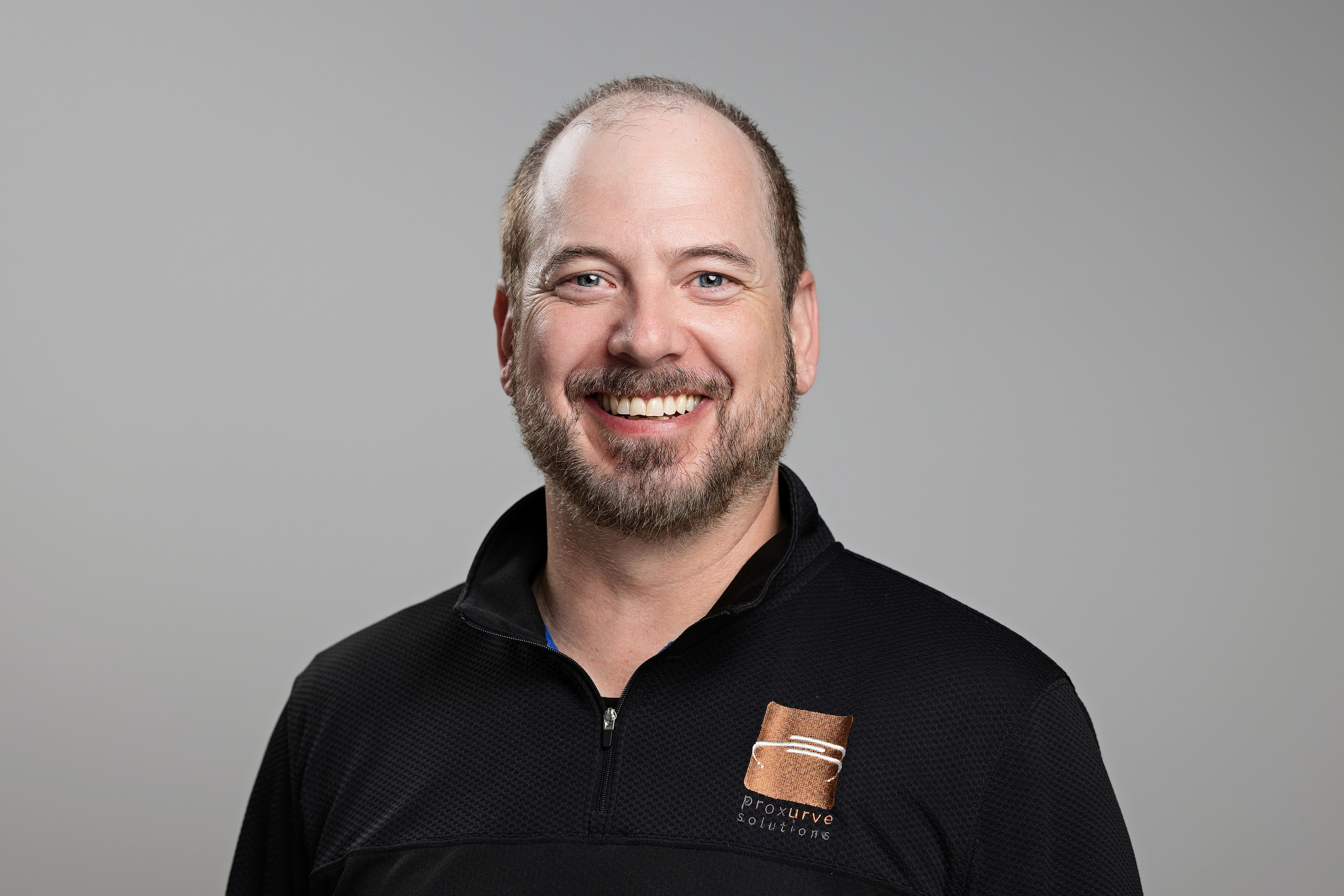

 Apple Podcasts
 Castbox
 Castro
 Goodpods
 Moon FM
 Overcast
 Pocket Casts
 Podbean
 Podcast Addict
 Podcast Republic
 Spotify