Rob Tracz: Why the Founder Bottleneck Survives Your 4am Routine
Executive Summary
The founder bottleneck rarely looks like a bottleneck from the inside. It looks like a founder who is good at everything, responding all day, wondering why growth has stopped. So the fix they reach for is personal: an earlier alarm, a tighter morning, a new productivity system. It does not work, and this conversation explains why.
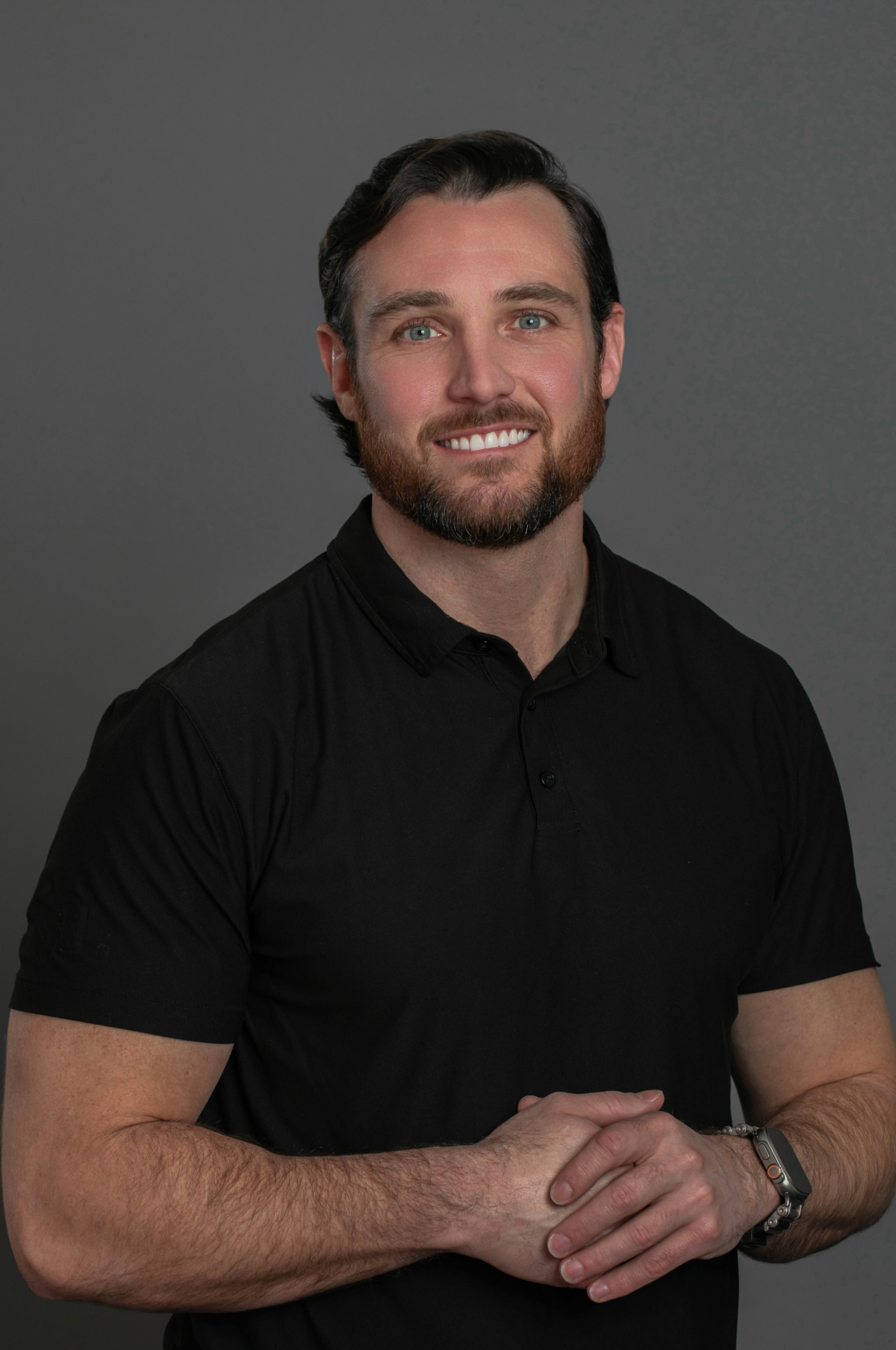
Rob Tracz spent more than a decade in human performance before bringing that lens to business owners. He holds a master's in exercise science and a strength and conditioning certification, has been featured in USA Today and Men's Health, and gave a 2026 TEDx talk asking whether we are optimizing ourselves into burnout. He is the creator of the Prime Performance Process and hosts the Surviving the Side Hustle podcast. He arrived at the question the hard way, working three years without a real day off, including the year after his father died.
Nate Grossman and Simone Henry walk him through the six principles behind that process, in the order he runs them, and through the decision filter he calls FLAG: foundational values, lifestyle alignment, aspirations, and growth opportunities. The conversation covers the operational tells of founder burnout that appear long before anyone is close to collapse, how to sort work by urgent, important, and significant before delegating any of it, and why business systemization has to come before the hire rather than after. Rob tells the story of a bookkeeping company owner who brought on a team of two and tripled her own workload, because she had documented nothing for them to work from.
This is for service business founders between $1M and $10M who have already hired, already tried to step back, and watched everything route straight back through them. You will leave with a way to measure your own capacity, a filter to run decisions through, and a clear line on the two things you should not hand off yet.
If what Rob shared resonated and you want help getting out of the reactivity trap, head to robtracz.com. He coaches service providers through the Prime Performance Process, runs Prime Performance Coaching and the Momentum Mastermind, and hosts the Surviving the Side Hustle podcast.
We are running original research on exactly this question. The Growth Ceiling Report maps how many of your eight revenue stages run without you. Four minutes, aggregate data only, and you see your own count on the spot. Take it at thegrowthceiling.com/report.
Subscribe to The Growth Ceiling wherever you listen. And if this episode helped you see something differently, send it to one founder who needs to hear it.
Nate Grossman: I got off a call recently with a marketing and communications consultant. She is the whole business, no team. Two clients on retainer, both custom work. Nobody has bought one of her published services. she wanted more people who recognize on their own that they need her. The people who already know her, buy. What she could not do was reach anyone new. I ran an audience research on her market. Twenty-five search terms came back for what her buyers actually look for. Not one of them contained the words she used to describe her own work. She had invented a title for what she does, explained it in three separate places on her website, and built a business around a category nobody searches for. People could find her, they just could not tell what she sold. The gap is that no positioning document sets upstream of anything she built. Her website says one audience, her application to me said another. And out loud she described a third. Without that one page, every asset downstream gets built against a different guest. Six competing calls to action on the home page, a three email sequence and nothing after it. A scorecard live a month with one completion from someone who already knew her. She sells referral systems to her clients and has never built one for herself. Every one of those is the same missing decision. And that's this week's growth ceiling.
Simone Henry: Okay, you crossed a million in revenue by being the person who can handle anything. Every problem came to you and you solved it because you were good at it. Now that same instinct is the thing holding your growth in place. The business can't move faster than you can personally respond. And you are already responding all day. Rob Tracz. calls that the capacity ceiling. And the harder you work, the lower it gets. welcome to the Growth Ceiling Podcast. Go ahead.
Rob Tracz: Mm.
Nate Grossman: Rob r Rob Tracz spent more than a decade in human performance before he brought that lens to business owners. He has a master's in exercise science and a strength and conditioning certification. He's been featured in USA Today and Men's Health, and his 2026 TEDX Talk asked a question most founders never stop to consider. Are we optimizing ourselves into burnout? He's the creator of the Prime Performance Process. And host the surviving the side hustle podcast. What makes his perspective matter to this audience is that he sees a part of the business most founders treat as a personal trait instead of a system input, which is their own capacity. All right. Welcome, welcome, Rob.
Rob Tracz: Hey, thank you guys for having me. I'm excited to be here and looking forward to diving into our conversation today.
Nate Grossman: Awesome. So before we get into the nitty-gritty of the framework and whatnot, I'm wondering if you can take me to the moment when you realize that the people that you work with were not short on discipline necessarily. It's more it was more about the fact that they were running a business with one point of failure, which being them, right? what was that pattern that you kept seeing?
Rob Tracz: Yeah, so before before I even got into teaching others or helping others implement the process and strategy themselves, I first found it with within my own self, right? So always being an athlete growing up, kind of sports was like my gateway drug into personal development. And that led me to a lot of social success, a lot of academic success, and really helped me pave the pathway for like the success that I was chasing after. so the principles and things that made me a good athlete carried over into being a great student too, finishing grad school with a 4.0 gra GPA. I was excited to get out into the work world. And I was my first actual position, I had gone in for an interview and was not even intending on taking the job. I just kind of went in and kind of reverse-interviewed them and was like, Hey, well, why would I want to work here? I'm about to finish grad school and so on. And The position was so attractive to me though, because it gave me my first taste of entrepreneurship. And as soon as I realized, like, wow, I could essentially make as much money as I want, and nobody really to tell me not to work. And I was like, this is great. And at getting into the workforce early, I was like, well, seems like most people are working roughly eight hours a day. And I'm like, well. That leaves a lot of other hours on the table. So if I could double that and get close to 15 a day, then I would hit the success that I was chasing after twice as quickly. Then I realized people were taking off on Saturday and Sundays as well. And I was like, well, that's two perfectly good production days. Like, well, I don't know why these people are just relaxing and not doing anything. so
Nate Grossman: Ha ha ha.
Rob Tracz: then my identity and ego as an athlete kind of shined through and it became like, hey, how can I grind? How much longer can I push? And Not taking a day off for two weeks turned into two months. And shortly after that, two months turns into two years without a break. And scaling up in my book of business to the point where wasn't taking any time off, holidays, weddings, birthday parties, etc., I just continued to grind through. And in that moment, I and had a lot of great success on paper, but also suffered a lot of loss, romantic
Nate Grossman: Mm.
Rob Tracz: relationships, friendships. And the hardest loss was losing my father to pancreatic cancer. And when he got sick, I told myself that I would make more time. And I told myself that there was more time for me to be with him. but I almost got caught up in the grind and what I call robot mode and which is like the flow state and the which is not inherently bad, but not being able to flip out of it is bad. And you lose the awareness and you lose your ability to process emotions and Ultimately, when my dad did pass, that busy schedule ended up becoming a distraction. So I continued to work for another year. So after three years without taking a real day off, I realized something needed to change. And when I began to adopt the principles that made me achieve the success that I had, I realized like, hey, there's a lot to this. And in entrepreneurship, a lot of people seem to be grinding, hustling, pushing. And our own edge really of being able to kind of continue and grind also becomes a downfall for so many small business owners because they fail to pivot and evolve and adapt to what they need to. And hence what I think we're going to get into in a little while about my framework on learning to go at your own pace and how you can leverage your capacity, build resilience systems around yourself and your business. So it's not a hundred percent dependent on you. and still be able to live the life that you want and enjoy the time with the people that you really want to be living that life with.
Nate Grossman: Yeah, that's that's that's some good stuff. Hard hard lessons to learn there along the way, unfortunately. Which, you know, I think anyone who has attempted the entrepreneur thing can definitely identify with
Rob Tracz: Yeah.
Nate Grossman: with this to maybe varying degrees. but I think everybody who has ventured out on their own has has experienced this at at some you know some point along the way. And so I thought I think that's a this could be a very valuable conversation, I think. So all right. So from from what I know of you and your framework and whatnot, I believe that it sits in what we refer to as the viability layer. and so we talk about the V3, right? The the visibility of the business. Are the right people finding you? are you showing up where those people spend their time? the viability of the business. Can it run on its own? Can it stand on its own two legs, you know, work without you, et cetera? Both of those things together make the business more valuable, right? there's also some other things that you can do to enhance that value, but those are integral here. And so I think that what you're talking about is hits in that viability layer. And it's those internal systems that either carry the business as it grows or You know, they they buckles, right? And the first system most founders never examine or maybe they forget to examine is themselves, you know.
Rob Tracz: Mm-hmm.
Nate Grossman: Believe it or not, you know, there it's important for you to to know how you fit into the picture there. And all right, so most founders who feel maxed out reach for a personal fix first. Maybe it's A better morning routine. You hear all these gurus out there, right? You know, about how to how to maximize your your your life, etc. Better morning routines, new productivity system, waking up an hour earlier, waking up at, you know, four four AM to go do cold plunge, whatever it is, you know. your your TED X talks, excuse me, your TED X talk argues that optimizing yourself can actually deepen the problem. So can you walk us through that?
Rob Tracz: Yeah. So to go back to my story when after my father had passed and I decided that something needed to change and as I was exiting out of strength and conditioning and into the more of the performance strategy world, I had to make some pivots and changes. And although it was a new world, I was trying to, like you were saying there, optimize my morning routine because of all the guru saying, like, hey, if you want to have a successful life, it starts with a successful morning and I was that person who was up 4 a.m. workouts, walking outside, cold plunge, et cetera, medit meditating and whatnot. And finally
Nate Grossman: Okay.
Rob Tracz: by like 3 p.m. I was done with my morning routine and I'm sitting back and I'm exhausted from it. Yeah. And I'm like, great, I need a nap.
Nate Grossman: Right. Time for work. Yeah. Yeah. Yeah.
Rob Tracz: And then I'd feel guilty for not getting into things as quickly as I wanted to. And and I kept trying to optimize it. Like, okay, well, where can I fit in these books, these coaching lessons, these other things, like trying to squeeze everything into my schedule. And the more and more and more is like pouring gasoline. And the more gasoline is making you go faster and faster. But if you don't slow down to check in and see which direction you're going, you look up and you're significantly down the wrong road, going in the wrong direction. So oftentimes it's like, hey, we don't necessarily need to be adding more As quickly as possible, as much as it is like, hey, where are we? Are we going in the right direction? And if we're not, how do we course correct and get back to it? So clarity ends up being the main cause or the main point for me. And when I'm working with my customers, it's like, okay, how do we get clear? How do we know we're going in the right way? So a framework for that I teach is the following the flag. So if you remember the four letters of flag, F-L-A-G. It should help you gain clarity on any kind of decisions that you're making because it keeps you grounded to the real main goal. So the first letter is F, which stands for foundational values. So if like values are great, everybody knows like successful businesses have strong core values. But what about you as the founder, as the individual? What are your own core values? More oftentimes than not, like our business values. Are close to our own personal values, but until you spend the time to really sit down and get clear on what your own values are, it you might default to somebody else's values that just been kind of placed on you. So spending that time to kind of figure that out, because that sets the foundation. The second letter is L, which is the lifestyle alignment. I know a lot of people start different businesses because they get really good at doing something. And then they quickly build themselves a second job instead of a business that can run itself. So keep it in mind: like, hey, is what I'm building, is it actually aligned with the life that I'm trying to build? Because at some stage, we're gonna have to step out of running and doing all of the technician work and really start becoming the manager or the owner. And then when we move from the L to the A, it's your aspirations. Like what are your actual goals for your business? What are your goals for the season that you're in? And why are these the goals? What do they actually achieve for you? How does it move the needle? And how do we get that momentum moving? And then finally, the last letter is G for growth opportunities. So who we are currently is great because that's helped us get to where we are. But if we want to get somewhere further down the road or we want to set up a business or change certain things, we need to learn. where what kind of skills and attributes that we need to develop in order to become that future version of ourselves. So whenever I'm sitting down with somebody, that's one of the first exercises kind of going through really defining those different letters so that we can get clear, make better decisions before we create the other systems and processes to move ourselves forward.
Nate Grossman: Okay, great, great. I I'm I I was having trouble. is this a a new framework that you're doing, your your flag framework?
Rob Tracz: So that's one of the first frameworks that I go through. I I thought we were gonna we're gonna dive into going at your pace, correct, right?
Simone Henry: Okay.
Nate Grossman: yeah, yeah. I I I that's well, I I guess I was thinking of the The six principles, is that not Okay. okay, okay.
Rob Tracz: Yeah, the six principles is the full process. Yeah. The the flag framework is part of one of the principles in there. That's the around the
Nate Grossman: Okay.
Rob Tracz: principle on clarity.
Nate Grossman: Got it. All right. I see. I see. I see. Okay.
Rob Tracz: Yeah.
Nate Grossman: Understood. Understood. Okay. very good. So that's interesting. yeah, you I guess you can do too much optimiz optimization then. so I I I I I think that there's some something to be said for you know, Maybe maybe facing reality as it is. But yeah, anyways, I I I think that there was kind of like a p a a big pushback there f against all the all the gurus that were coming out there. Seemed like was it twenty eighteen ish. I feel like I I was w seeing a lot of stuff like that out there, cold plunges and everything like that. But anyways, may maybe that's all behind us now. so When when someone is convinced that their the answer is having more discipline, what are they usually missing about their how their business is actually built? Speaking of facing reality as it is, huh?
Rob Tracz: Yeah, I mean for what I've been seeing, it's like, all right, yeah, I need to add more discipline into what I'm doing and and kind of relying on willpower and that can only go so far and the discipline is what we're trying to get through. So setting up the different systems and making sure that we have the routines and we live by these certain rules can really help us check the box, move to the next one and get things rolling. but then going back to like earlier, like that awareness of like, hey, how things are going, when do we check in to make sure that the systems that we're building are moving us forward and so that we can continue to still make those new milestones and and growth really.
Nate Grossman: Nice. okay. I I yeah, it's interesting. I having that it is possible to maybe have too much discipline or maybe the focus is off there. That's interesting.
Simone Henry: Maybe your discipline needs to leave room for some spontaneity and for changes. Yeah.
Nate Grossman: Yeah. Yeah. Yeah.
Simone Henry: I think there is something to be said for being too disciplined, but having having the discipline and the consistency is is great. It's like creating a system for yourself. But but yeah, stuff happens, life happens, things go wrong. I think there's
Nate Grossman: What is it they s
Simone Henry: need to leave leave a little room for for changes and for pip being able to pivot.
Nate Grossman: What is it they say about chance favors the pr the prepared mind? You know?
Simone Henry: Yeah.
Rob Tracz: Yeah.
Nate Grossman: okay. All right. So so g can you give us a real example? You can anonymize it if you need to. someone who was doing everything right as far as personal productivity playbooks go, and they still kind of hit that wall. What what did you find was going on underneath that they couldn't see?
Rob Tracz: Yeah, I mean, I'm the perfect example to go for this too, right? Shifting gears and leaving strength and conditioning. It was like, okay, well, there's a lot that I still need to learn in the world. So like have having like a mo like the morning routine where I was like, all I want to make sure that I set everything up as po perfectly as possible. I need a coach for this, I need a coach for that, I need to sign up for this course so that I can learn these different things. And I would tell myself, like, all right. No no leisure time, no TV, not even listening to music. So like in the car, even working out, it would all just be books learning, learning. And sometimes too much of a good thing can also slow down the speed at which you're growing, too. It's like just like if you're driving down the road and you got some some dirt or some bugs kind of splash up onto your windshield, you wash them off with your wiper fluids and your wipers. And that's kind of like the types of content and conversations and in our environment that we're our surround ourselves with. So some of those things kind of slow us down and get in the way. And typically we can just brush them off with some more motivation, educational content to get us back on track. But same thing as driving down the road and you get caught in a really bad thunderstorm and you got your wipers operating at maximum speed, you still can't go as quickly as you'd like to. So you gotta throw in the hazards and kind of slow your pace down a little bit and The same thing that was happening to me. I was like, consume, consume, consume. And that didn't leave any room for me to actually create anything. So going back to like what you were saying before about like, yeah, leaving some room for spontaneity and creativity to kind of come through. And because I was drowning myself with so much consumption, there was no room for creativity until it
Nate Grossman: Mm.
Rob Tracz: got down the road again. And I'm like, I need to actually start doing some stuff. I can't just sit back and learn about everything. I need to like actually take action and And get into that creative seat myself.
Nate Grossman: Mm. Yeah.
Simone Henry: Think I think sometimes we do get into that especially new entrepreneurs. and I don't know about like experienced entrepreneurs, but yeah, there there comes a point where there has to there has to be kind of you know, you start out learning, learning, learning everything you can, but then you have to get to a point where you're learning more like you know, twenty, forty, fifty percent, and you're taking action, you know, fifty percent, right? and you're you're I've gotten to a point where I'm like, okay, I'm going to ignore everything except for learn the stuff that I need to know right now to do the next right thing. Because otherwise I'm just soaking up all this stuff that I can't actually use right now.
Rob Tracz: Yeah. Yeah, exactly. And for you personally, like
Nate Grossman: Yeah.
Rob Tracz: when do you make that decision of like, hey, what maybe I do need to tone this down a little bit? Like it is time for me to like learn something new or maybe I need to continue learning more of this before I can kind of dive into it myself. How do how do you draw the line on like when and where to draw like how much you should be bringing in?
Simone Henry: for me it was I don't know, I I came I I guess I woke up one morning and came to realize realization that I wasn't doing much. I was learning a lot, I knew a lot, but I can't say that I I couldn't say that I had any personal stories of like, I'm experienced at this thing. I've actually done this thing. It's all stories from books and you know lessons that I've learned from coaches and different things like that. Nothing nothing in my own life that I could say was was really, you know, I could say that I actually done it. You know, and I realized like, yeah, learning is great, but experience is is a much better teacher. You have to get out there, get your feet in the mud, fall down. You know, clean yourself up, keep moving, you know. Learn from the past, keep moving and you know, and and keep going. That's that's how you that's the best way to learn. You know, the books and and everything, they will they'll only get you but so far. You know, having that knowledge in your head is great, but I've been listening to this guy named Myron Golden and he talks about, you know, like what is it, like three stages of wisdom or whatever. you know, starts with not knowing anything and then you know something, you now you have knowledge and then you have to have understanding. But the wisdom actually comes from experience, actually doing the thing. Now you can say, I've I'm I'm wise, I have some experience, right? Otherwise otherwise it's kinda, you know, just all in your head.
Rob Tracz: Yeah. Are you familiar with the like the conscious competence continuum?
Simone Henry: I have I've heard of it, yeah.
Rob Tracz: Yeah, yeah. Nate are you? okay. I was gonna say, yeah, so anytime you
Nate Grossman: I'm not. I've never heard of it.
Simone Henry: Huh.
Rob Tracz: start something new, usually you kind of fall into the unconscious, incompetent category. And then you realize like, I am bad at this, and then you're consciously incompetent on what whatever the task is or skill or whatnot. And then as you continue to practice and get better at it, you move along and now you're consciously competent in it. Now you're starting to develop a little bit of skill. You get a little bit better. And then if you continue to practice and play and develop and get better at it, that's where you shift into that unconscious competence where you can almost operate on that like autopilot kind of state. Like driving, for example. When you first learn how to drive, you're like, I don't know what I'm doing. And then you slow down. Okay. Let's go to the parking lot and practice a little bit. And then you get good enough and then you can think your way through and you actually pass your road test and then fast forward a few more years and you might go to work or the grocery store and not even remember the drive and turns you did because it's so auto public.
Nate Grossman: Yeah. Yeah.
Simone Henry: Calls it like you're you're so well versed in it, so well practiced at it that you really can't get it wrong.
Rob Tracz: Exactly.
Nate Grossman: Mm, yeah.
Simone Henry: At first you practice until you get it right. Now you now you're so practiced and so well well well versed in it that now you can't get it wrong.
Nate Grossman: This is making me think of a couple of like catchphrases. You know, th those earworms that kind of stick in your brain. One of is I think it might maybe hormo Alex Hormozy said it, but I can't remember precisely where I heard it, but done is better than perfect, right? Like so many so many p times people will try to do something until it's like just right. Or like in this case, maybe they're trying to perfect their personal productivity, et cetera, right? to the point where it's it's it's a detriment to everything else, right? so getting it done, t choosing a path, you know, is better than actually like trying to perfect it. So that's kind of interesting. Another one
Simone Henry: Yeah.
Nate Grossman: that that brings to comes to mind is the concept of saying no is a skill, you know, in and of
Rob Tracz: Yeah.
Nate Grossman: itself. Like like knowing when to say no to to things. is is a is a a very important skill to have.
Simone Henry: First time I heard Dave Ramsey say, No is a complete sentence.
Nate Grossman: Yeah you go. There you go. Yeah. Yeah. Awesome.
Simone Henry: And I think that's the hard part too, like being an entrepreneur, like saying no to yourself and saying no to good ideas so that you can work on the great stuff. The great ideas.
Nate Grossman: Yeah.
Simone Henry: Yeah.
Rob Tracz: Yeah.
Nate Grossman: All right. Very good.
Simone Henry: All right, so when a founder is at a single point of failure or when a founder is the single point of failure, how does that show up first in their day-to-day before, you know, any before they're close to burning out? You know, what what kind of the operational tells?
Rob Tracz: Yeah. I'm sure I'm sure both of you guys and many listeners also can relate to it. It's that little bit of like, Okay, now I gotta pull up my pants, I gotta I gotta buckle down a little bit more, I gotta grind a little harder, and you you begin to push a little bit more and some exhaustion kinda comes in a little bit and it could be physical or could be mental. Usually are like the first signs of tiredness and And then you are supplementing with the energy and using music to kind of hype yourself up or caffeine. So many of us are love our caffeine, to kind of push our through it, push ourselves through it. And then then we get into the habit of like continuously just putting out fires and we lose that intentionality on the different things that are move really moving the needle forward. And and then you begin to continuously doing those same fires day in and day out, and we losing a lot of support because we take on more ourselves. And it's like, why would I risk somebody else doing this wrong if it's if I'm I I could just do it the best as quickly as possible. So then we put more onto our plate and then we begin feeling a little isolated and then opportunity starts to disappear because we're spent so much time putting out those fires and and struggling and bearing everything. Then all of a sudden it's like, shoot, I can't step away from this because I am the business. And without me business just fails. And a lot of like I've seen people bringing on support staff and they're the ones who are paying their staff, but then they can't pay their staff if they don't step away because they have constantly repeating things that their staff is supposed to be taking care of. And instead of building a business that grows and creates value for the world, they're just created a job that They know like it's not just them that they're relying on or that relies on the success of their business, but it's also their staff that relies on them as well. So they end up digging a deeper and deeper hole for themselves when a lot of it could have been avoided by taking the precautions in the beginning to really set up the systems and making sure that, like, hey, everyone's got a role, everyone's doing their things, let's all operating at our best, and then bringing that awareness back in to make sure that. as soon as people start to go down this wrong path or the wrong direction towards burnout, it's like we can cut it off ahead of time and and put in practices to make sure that we don't get too far down the wrong road.
Nate Grossman: Thanks.
Simone Henry: So instead of having a
Nate Grossman: Okay.
Simone Henry: repeatable system, they end up putting out the same fires over and over again. And it's like, yeah, you are the repeatable system at that point. Yeah. Yeah. It's
Nate Grossman: Well, I guess that yeah, that is a repeatable system, just not the one you want. Yeah.
Simone Henry: like, okay, yeah, let's let's work on doing this a bit better. Right. Hmm.
Nate Grossman: Mm-hmm. All right. Well, speaking of repeatable systems, Rob, you you turned this you know framework into a repeatable system and you call it the prime performance process. How's that for alliteration? six principles. I and so I what I want is the audience to walk away with or and be able to use it, you know, on their own if they so choose. So can we kind of get into that here? Can you Start start off by giving us the architecture. What are the six principles? And I think that the order is important, correct?
Rob Tracz: Yeah.
Nate Grossman: Yeah.
Rob Tracz: Yeah. The so the sixth principles going back to what I was sharing earlier of like what's made
Nate Grossman: Yeah.
Rob Tracz: me a great athlete and a good student and my early stages in the entrepreneurship is like okay these principles have been transversed through to the different parts of my life and bringing them into entrepreneurship is like okay well first thing is the resilience like hey where are we at how much can we actually handle what is our capacity And many of us dive into this world and we're like, okay, I can take on more, I can keep pushing, I'll sleep later. And we sacrifice ourselves for the good of our business. And there are different seasons when we do need to make those sacrifices, but without the awareness of knowing when the season is shifting, we can find ourselves getting caught in this robot mode. And eventually every day is a Wednesday and there's no weekends anywhere nearby. So the resilience aspect is the first one and checking in to see like what are our outputs, what are we doing? And are those things moving the needle forward? And do we have practices and strategies to recover efficiently and appropriately as well? And once we have a good clear understanding of our resilience factor, then we move into the intentionality. And this is where we look at our energy and our motivation and what's really affecting the speed at which we're moving forward. Because the whole prime performance process as a whole is that personal performance strategy where we're operating ourselves on the best. So move from resilience into intentionality, what's fueling our engine and our engines and what else is in our environment and keeping us moving forward. then we get into principle three around clarity. And this is where we go through that flag framework that I had mentioned earlier in the episode. And it becomes
Nate Grossman: Gotcha.
Rob Tracz: like a decision-making matrix that we can run through. It's like, hey, are the things that I'm making decisions around, is it moving the needle forward? Is it helping me generate that momentum to kind of push push us forward to that next stage? And then moving from the clarity into efficiency. And this is where we learn to go at our own pace by figuring out what to. prioritize, where can we automate? What do we need to cut out? And how do we evaluate? And going through that is like we lose a lot that we don't need to, because oftentimes trying to increase the speed and efficiency is reducing a lot of noise and things that we don't necessarily need around us. And once we've got our own self-optimized, it's like, how do we develop our influence, which is the fifth principle. And in order to figure out how to influence others, we first need to realize like who's influencing us. Like who are our coaches, who are our captains, and who is the crowd that's kind of supporting us and moving us forward. And then finally the last principle is really on opportunity and how to create new opportunities for yourself that'll get the ball rolling again. especially when we start to plateau and get stuck on different milestones that we have previously just been ramming into the wall that's helped us before just living off of effort. but to create new opportunities and new levels, we need to figure out new strategies to get around.
Nate Grossman: Okay. So r resilience, intentionality, clarity, efficiency, influence and opportunity. All right.
Rob Tracz: Yes.
Nate Grossman: Awesome. okay. So do you ever in the in the the clients that you're working with, do you ever come across one of those that tends to be resisted more than the others?
Rob Tracz: Yeah, so majority of the people that I've been working with, they can kind of figure out or they can muscle through a good amount of the principles and kind of getting themselves through. But the one that I see as a through line that a lot of people struggle with is the influence principle and and how to communicate effectively with others. And you see it all the time when you go to any kind of networking events, right? You see the one person who's just like, here's my business card, let's talk business and buy my stuff and blah, blah, blah, blah, blah. And yeah, like if they have something that's really for you, they might buy it right off the bat. But more times than not, it's not necessarily about that. It's built building those relationships that you so that you can move that forward. So how do you find the right relationships? How do you communicate effectively? do you even know different influence tactics? Do you know what kind of powers are at play during the different dynamics and How do you make sure that you set yourself up to achieve the success you're looking to?
Nate Grossman: That's interesting. I would think that people who were who considered themselves to be high performers would be great at influences. That's that seems counterintuitive. What why
Rob Tracz: Well, yeah.
Nate Grossman: do you think that is?
Rob Tracz: Well, I feel like ego is a huge part of it. So high performers like
Nate Grossman: okay.
Rob Tracz: coming out like, yeah, that's great, but influence is like the ability to create the change. So like we're influencing everybody all day along, the kids, our customers, people on social media, w whatnot, but are you influencing correctly? Are you creating the change or are you just forcing influence? And h how do you do that? You build better relationships and build better relationships through trust and showing up and consistency and and communicating effectively.
Nate Grossman: So when someone is you know worked on that and it's actually working well for them in that case, and th they they have applied it in their own life, how what is you know, what does that look like for them in let's say for in during the the work week, for example?
Rob Tracz: Yeah, better like better sales calls, better copy for marketing material that's just even in their own personal lives, like being able to turn off out of work mode and back into being themselves and deepening relationships around them, their personal and the professional. Being able to kind of be more of a like a chameleon and and adapting for the different situations and range instead of just purely stuck in one mode.
Nate Grossman: Okay. So let's let's d slip into hypothetical mode here for a second. and imagine that we have a a service business because this is this is like our audience who we wanna who we're speaking to. A service business owner out there who's maybe doing two million to three million, they have a team of, you know, twelve or so, and that founder is sitting in the middle of most of this of the decisions. So where do they start with your process and What changes in the first ninety days for them?
Rob Tracz: Yeah, so sitting down would be going through the whole a s quick little assessment saying like, hey, where are we at? Which principles are our strongest suit and where do we need to spend more time? And and then it's kind of going through creating a playbook per principal to see like, hey, are you someone who's like burning out, taking on too much of your team? Are you delegating correctly with your team? And kind of figuring out like, hey, where do we need to spend the most time off the bat? So In the first ninety days, it's like, okay, let's get the ball rolling, picking up the pieces on like our lowest scoring principle, putting together a playbook and then executing it on the first like forty five days, checking in, seeing, hey, how do we adapt and move forward from here so that the next forty five days, we build on top of it or compounding instead of just resetting, starting back and putting out fires again. It's getting creative with what we need to be doing and checking in on the personal side of things so that we can continue to move forward.
Simone Henry: So how much of that depends on on automations and systems for the the founder to to step back?
Rob Tracz: Yeah, I mean it kind of depends on their situation, right? So if we're looking to improve efficiency and maybe their schedule or life is chaotic and the team's all over the place, it's starting off with like your priorities, like what do we need to work on first? How do we figure out which which task, what what needs to be done and handled first, what is most urgent, what is most important, and what is the most significant. And looking at those helps us create and a plan of attack on that. And then if we're spending way too much time on easy things that could be tackled quickly, we delegate the ones or we automate using AI or other tools out there in the world now. AI obviously is exploding. every single week it seems like there's new features and new things out there. So a lot of small business owners who have been relying on a lot of other people can leverage AI for a much smaller cost. And it's important to not jump the gun and and try to replace people with the AI right off the bat. But it's like, hey, what can we use these different tools for that can help us automate and move things forward and what can we continue to delegate to other people? And that's kind of the whole world of that efficiency if that's what they're looking to improve on.
Nate Grossman: So I'm look I'm speaking of when back when I first was introducing this segment, I I mentioned the fact that the order as you say is important. And so it seems
Rob Tracz: Yeah.
Nate Grossman: like correct me if I'm wrong here, but you're kind of working from the inside out. Is that is that right? You're working on the inside with the resilience, intentionality, which is like an inward facing thing, and then out towards, you know, the the clarity, efficiency are more like how they're working. And then influence and opportunity is like going out there into the real world, right? Is that am I getting it right or okay, right. Okay.
Rob Tracz: Yeah. yeah. Yeah. Yeah. Yeah. You've got it. Yeah. You want to starting because what we're doing is implementing personal operating systems for for the founders and and so you work from yourself out. So like if you can
Nate Grossman: Yeah.
Rob Tracz: improve your performance, then you're gonna perform or improve your personal and professional performance. Jim Rohn is pretty famous for saying like your professional success is capped at what your personal development can get to. something along those lines. I probably butchered that. But essentially essentially your professional success
Nate Grossman: Yeah. Yeah.
Rob Tracz: is limited by your personal development.
Nate Grossman: Mm-hmm. Okay. All right. so what you're doing with with the people that you're working with is helping helps the founder get out of the the trap of reactivity, right? I think to a certain extent, and it helps them to build their capacity to lead differently. So given that, what what has to be true in the rest of the business? with you know the other things that are there, right? Because there is more to the business than just the founder, believe it or not. Most founders might not think so, but there's the sales process, the handoffs, the team, right? What what all what has to be true in those aspects for any changes that are being made in the founder to actually hold?
Rob Tracz: Yeah, I mean, so the the business itself has to be operating and and moving s like smoothly first. Like you can't just willfully magically make things kind of create. So the the founders gotta have the systems in place and at least moving certain things through and being able to create the room for themselves to then trickle down and spread it to the rest of the team. So if the person there is not separating and putting other systems in place for other things then they're kind of stuck on that. So right like if they're busy caught up where they're juggling everything they can't get out and they can't communicate with the team to work on new sales practices or different strategies for marketing and getting out to there if they're too busy putting everything else on their plate, tackling everything at once.
Nate Grossman: Hard to think strategically if you're the one in the in the doing it, right?
Rob Tracz: Exactly. Yep.
Nate Grossman: Yeah, yeah. All right. Very good. Let's get into the multiplier effect here. talk we're gonna talk a little bit about what compounds in either the personal life or maybe the business when the founder actually stops being the constraint on everything and and so forth. So When that happens, when the founder finally does step out of the bottleneck, they're no longer in the way, in their own way, right? Their own worst enemy. what what starts working that they did not expect?
Rob Tracz: Yeah, when they when they're removing themselves from the business, then the business itself starts to move on and it continues to grow, right? You reduce your the dependency on you. And you also increase the predictability of the consistency of the things that are going on. a lot of times solopreneurs or early stage entrepreneurs that are in this constant state of hustle, trying to piece everything together. And once they can begin to develop some processes, then they can increase the predictability of the certain outcomes and then they can start to reduce some of their own dependency. And then moving further through the processes into creating the systems to run without them, they can confidently rely on those predictions for those outcomes and then really reduce or replace their dependency completely. So the moving from that hustle all the way through to the systems. that's when they can finally step out and then going back into spending more time growing the business as opposed to like working and being in the business.
Nate Grossman: Does anything do you have any like examples or stories of, you know, maybe somebody was surprised by a change that occurred?
Rob Tracz: yeah, so
Nate Grossman: At this point.
Rob Tracz: yeah, this this woman that I was working with, she had a bookkeeping company and she was constantly putting out all the different fires nonstop. She hired a team to that she was expecting this team of two to kind of help her with the workload, but she didn't have any of like the processes or systems down and she just assumed that they were gonna be able to come in and take over stuff and take things
Nate Grossman: All right. Yeah.
Rob Tracz: off her plate. So she was stuck. doing triple the work because she was bringing on more into the business, but then didn't have didn't set her team up for the success. And when she slowed things down and really established the priorities and created the plan and figured out exactly what needed to be delegated and whatnot, she started working together as a team. And and then from that she was able to hire an additional person and finally kind of get back her weekends and wasn't so consumed on things and once she had her weekends back, she felt like she was able to operate a little bit better, a little more of a charge. And then she was able to get out and get to more networking events and spend time connecting, developing the relationships and then bringing in more business for herself so that she could continue to hire additional support staff.
Nate Grossman: Nice. So that first they were surprised that their help didn't didn't couldn't read their her thoughts. Okay, no
Rob Tracz: Yeah.
Nate Grossman: Yeah. Yeah.
Rob Tracz: Surprisingly, not everybody can read minds.
Nate Grossman: okay. Yeah.
Simone Henry: Superpower most of us don't have, huh?
Nate Grossman: Okay, so can we can we get into some numbers here? When when capacity is not the issue, right? It's not the ceiling anymore. What happens to revenue and w and the hours that the founder personally puts into the business?
Rob Tracz: Yeah, so like when the capacity kind of fills back up and we have that room to take on more, obviously we can bring more, we can work more on the business, but those same hours aren't the same hours as maybe putting in like data entry and and things that you're doing back when you're in the technical standpoint of things because your hours are stronger hours. You're doing things, you're creating the relationships, you have more value behind your hours and then that helps bring more revenue in through the door because you have bigger items that you're tackling and taking on instead of like the nitty-gritty. So same thing with like the like podcasting. If you're s stucks podcasting, editing the episode, marketing to people, you're maybe not being able to bring in new guests or connecting with people or sharing it with others so that it actually extends the reach out of the show. And then you kind of get caught in this rhythm of working on these lower value hours versus Working on the more higher value hours.
Nate Grossman: Yeah.
Simone Henry: had a I had a client who she's a a naturopath and you know she was asking me if if she should pay extra for for Walmart to do the boxing and the shipping of her vitamins and different products and stuff because you know she's selling them on the Walmart. website and they had a and they have a service where, you know, pay us, we'll we'll do the boxing and the shipping and the labeling and all that for you when people order. Or you can do it and and it's a little cheaper. And I said I told her, I said, Well, aren't you a doctor? Do doctors box and label stuff and pack and ship? I mean I feel like you
Nate Grossman: Yeah.
Simone Henry: could be doing much more high value value things. you know, actually working with patients and putting together putting together these these health retreats. and events that you want to do rather than boxing up vitamins. Like that's something you pay a minimum wage worker or teenager on vacation for the summer to do. That's not something a doctor should be doing.
Rob Tracz: Yeah.
Nate Grossman: Yeah.
Rob Tracz: I have I had a good friend of mine a while ago who is an artist and he was creating he was laser engraving a lot of different things. And when his business started to grow a little bit, he started getting a lot of views on social media, which led to a lot more orders. And he told me that he just couldn't fulfill the orders fast enough because he couldn't because he couldn't answer all the emails at a quick enough rate. And I told him, I was like, dude, like your skill isn't answering emails. You can hire your little sister to answer the emails and place the order. And he told me, No. She can nobody else can answer emails quite like I can. And I was like, is this an email answering business or are you an artist
Simone Henry: Yeah.
Rob Tracz: trying to do something here? Shouldn't you be spending more time on creating versus just the answering of the emails?
Simone Henry: Exactly. It's like people you need to remember who you are in the business rather than rather than looking at I'm paying investing the the little amount of money it takes to take these these menial tasks off your plate so that
Rob Tracz: Yeah.
Simone Henry: you can be be the person that that that people come to and you're you're the person that can Do only what you can do, right? You know, you're the the speech writer, the the book writer, you're the artist, you're the doctor, you're, you know, that person. Let somebody else do the packing and the shipping and the answering emails and the you know, answering phones and all of that stuff. It's it's so funny how people think that they I think they forget who they are and they forget
Rob Tracz: Mm-hmm.
Simone Henry: that
Nate Grossman: Yeah.
Simone Henry: That just the the amount of money that that goes out for taking something off their plate is you know, that's that's not what they were here for. That's not what you created the business for.
Rob Tracz: Yeah, exactly.
Nate Grossman: Yeah. That there's a there's an opportunity cost, you know, with everything. And time time is a finite resource and it has value of its of of its own, right? And so until
Simone Henry: Absolutely.
Nate Grossman: you until you grasp that and appreciate it what it means, you know, really, you're just gonna a lot of times b business owners, founders, they say, I'll just do it myself, you know, because then it's only costing me time. Well, how valuable is your time, you know? If you set out your goal at the beginning of the year, I want to make this much money, we'll break that down. How how much is your you know per hour do you need to be making then, right? Like and if it costs you less than you want to be making, well there's you know, there's an obvious advantage there, I would think.
Rob Tracz: Yeah.
Nate Grossman: okay, so Rob, you coach you're coaching people on sustainable performance. When When that is when they get that right, the business you know, presumably starts to be worth more than the founder's time inside it, speaking of. so what does that shift feel like for the people that that you work with and how do you know it it's actually taken?
Rob Tracz: Yeah, a lot of times they're feeling they're feeling weightless because they're moving, they've they can feel the energy of the momentum around them. They're active, they're doing things, they're no longer stagnant or their business is no longer stagnant, and there's new opportunity around them. So they have this energy, vitality, they are strength, confidence, they're feeling connected, they're feeling like things are moving smoothly. And when they're in that kind of mode. It's like, all right, cool. Now you have this skill, this system or process to kind of repeat this. So it's like, when's the next challenge? You're you're seeking out the challenge as opposed to like shying away and keeping to yourself. So it's the yeah, it's some it's tangible enough where you're energized, you're creating new opportunity, not only for yourself, but others around you, your community and and the value is just become so much stronger all around.
Nate Grossman: Nice. I think I can. I think I can, right? I
Rob Tracz: Yeah, exactly.
Nate Grossman: love it. all right. We're gonna let Simone, you wanna take you wanna take us into the rapid clarity round?
Simone Henry: Sure. our wrap it clarity round. we're gonna fire off some questions at you and we want short, quick answers. So, ready? Okay, first one. One question every founder should ask themselves this month about how much the business leans on them personally.
Rob Tracz: Yeah, it should just be asking like, hey, how much am I actually doing? Like am I overworked? Am I run down? Or like is there other things that other people can be doing? So asking yourself, like, am I doing too much right now?
Simone Henry: That's a question for all of us. If someone has never separated their own output from the business's output, what is the single first step they should do this week?
Rob Tracz: The first one I think is to like slow down and just kind of like pause. Like create a little bit of space because if you haven't separated, then you're probably doing so much right now and you w need to find a w space to kind of pause and think and look so that you can make a plan and then you can take action on it and then you can go from there and decide whether it was a good decision or a bad decision or maybe you need to change something. But I think it starts with that creating of separation and that pause.
Simone Henry: Awesome. One early sign that a founder is optimizing themselves into burnout instead of building real capacity.
Rob Tracz: Yeah, yeah, I think it's that the first thing really is that like physical drain. And we all know that we're gonna have hard days and long days and it's like, yeah, I can take it on, I can keep pushing. but when you realize like, hey, I've been really exhausted for a while. And if you're unsure of when that's exhaustion season's supposed to be finished, that's probably a pretty good sign that you're heading down some burnout if you don't know where the end zone is.
Nate Grossman: Hm. No light at the end of the tunnel. Yeah.
Rob Tracz: Yeah.
Simone Henry: Right. The first task a founder should hand off in your experience, and the first one they should never hand off.
Rob Tracz: yeah, I think the first one you should hand off is something at home, like laundry or grocery shopping or something so that you can spend more time on the on the business and in there. But if you're talking specifically in the business, I would say finding somebody else who can either sell what you're trying to do or another coach if you're in like the services kind of world. I think hiring somebody who's already gone through or who's who's like who's a big fan of yours can be a huge asset into Not only just for future delivery of what you're selling in coaching, but also helpful with like marketing and sales through the other side.
Simone Henry: I've seen people do that where they build up these communities and then they wanna they wanna offer some new services, new things and they hire from within the community people who have paid them and to come in and they're they're very excited. They're they kind of become community leaders. really just by on the strength of their their personality and wanting to be be helpful. It's like, you know what, that's a person that that would work in for for this new project or whatever, you know, and they get people from within the community. I think that's a great idea.
Nate Grossman: Nice. Well it did did you answer the second part of that question, Rob, about the first one they should never hand off.
Rob Tracz: so the first one that they should never hand off. I mean, yeah, you probably don't want to be handing off all like the keys to the business right off the bat. So like the banking, financial, like collecting of the money and stuff like that. So down the road, yeah, you can do that. But I feel like keeping everything yourself and the decision making for growth should not be something that you're handing off anytime soon.
Simone Henry: Sense?
Nate Grossman: Awesome. All right. Well, I think just to summarize here, what's kind of sticking with me is that the presence of a capacity ceiling is not necessarily reflection of you know a personal failing in the business owner. It's a signal that the business is built around one person's constant response. And what Rob is doing helps to rebuild that person so that they can lead in a different way. And that's presumably no longer going to be an issue. And so that's part of the bigger picture here. You know, visibility gets you leads, viability gets you out of the weeds, value sets you free. And what Rob does lives right there where viability starts. Getting you out of the weeds, in other words.
Simone Henry: So if what Rob shared resonated, here's what you do to connect with him. He coaches service providers who have hit that capacity ceiling through the prime performance process. You can find him at robtracz.com, R-O-B-T-R-A-C-Z.com. Because it's not spelled how it's sound or how you pronounce it. Connect with him
Nate Grossman: Yeah.
Simone Henry: on LinkedIn and listen to this to his show. Surviving the Side Hustle. If you want structured support, he runs Prime Performance Coaching and the Momentum Mastermind. follow what he's doing. Great, great stuff, y'all. And we are also looking for your input on new original research we are conducting. It's called the Growth Ceiling Report. We want to map exactly what runs on your systems. What runs on you personally and where predictive predictability breaks in businesses like yours. It takes only about four minutes. We use aggregate data only, and you see your own results on the spot. Specifically, how many of the eight revenue stages are currently running without you? Take the survey at thegrowthsealing.com/slash report. And Don't forget to subscribe and share this with other founders who need to hear it. And if this episode helped you to see something differently, send it to a founder who needs to hear it. Thank you for being here on the growth ceiling.
Nate Grossman: Thanks a lot, Rob.
Rob Tracz: Thank you guys. It's been a pleasure.


 Apple Podcasts
 Castbox
 Castro
 Goodpods
 Moon FM
 Overcast
 Pocket Casts
 Podbean
 Podcast Addict
 Podcast Republic
 Spotify